

Table of Contents
- Why Clay Soil Drains Poorly
- 1. Aerate Your Lawn to Relieve Soil Compaction
- How to Use a Core Aerator Effectively
- 2. Apply Top Dressing to Clay Soil
- 3. Improve Water Penetration With Soil Wetting Agents
- 4. Add Organic Matter and Soil Conditioners
- 5. Loosen Compacted Clay With a Rotary Hoe
- 6. Create Raised Garden Beds or Mounding
- Summary: 7 Ways to Improve Lawn Drainage in Clay Soil
- Frequently Asked Questions
Last Updated: September 24, 2026
Why Clay Soil Drains Poorly
Clay soil compacts easily. When soil particles pack tightly together, water cannot move through the profile freely. Instead of soaking down to plant roots, water pools on the surface, runs off, or sits in the root zone where it causes root rot and fungal problems.
The issue is structural. Clay particles are extremely fine, much smaller than sand or silt. They bind tightly when wet and become rock-hard when dry. This dense structure leaves little pore space for water, air, or nutrients to travel through. Over time, foot traffic, mowing, and general use compress clay further, making drainage worse.
If your lawn develops soggy patches after rain, stays waterlogged for days, or dries unevenly across the surface, clay soil is likely the culprit. The good news: you don't need to replace your entire lawn. There are 7 ways to improve lawn drainage in clay soil, and several practical methods can open up the soil and improve how water moves through it.
1. Aerate Your Lawn to Relieve Soil Compaction
Core aeration is one of the most effective ways to improve drainage in clay soil. A core aerator removes small plugs of soil from the lawn, creating channels that allow water, air, and nutrients to penetrate deeper into the root zone.

Unlike spike aeration, which simply pokes holes without removing soil, core aeration actually relieves compaction. The removed plugs create permanent openings through the compacted layer. Over time, these channels help rewet the soil and improve its structure.
Core aeration works best when the soil has some moisture. If your clay is bone-dry and rock-hard, water your lawn a day or two before aerating so the tines can penetrate effectively. Avoid aerating over buried services like irrigation lines, electrical cables, or dog fences, mark these areas first.
The cores left on the lawn will break down naturally over a few weeks. You can leave them to decompose or rake them up if you prefer. Many homeowners combine aeration with top dressing to fill the aeration holes and introduce better soil material into the profile.
For Mackay properties, hiring a professional core aerator gives you access to purpose-built equipment without the cost of ownership. Same-day and 24-hour hire options make it easy to fit the work into your schedule.
How to Use a Core Aerator Effectively
Operating a core aerator is straightforward, but a few techniques will improve your results. Start by mowing your lawn to a normal height, don't scalp it. Make multiple passes over the lawn in different directions, overlapping slightly as you go. This ensures even coverage and thorough aeration.
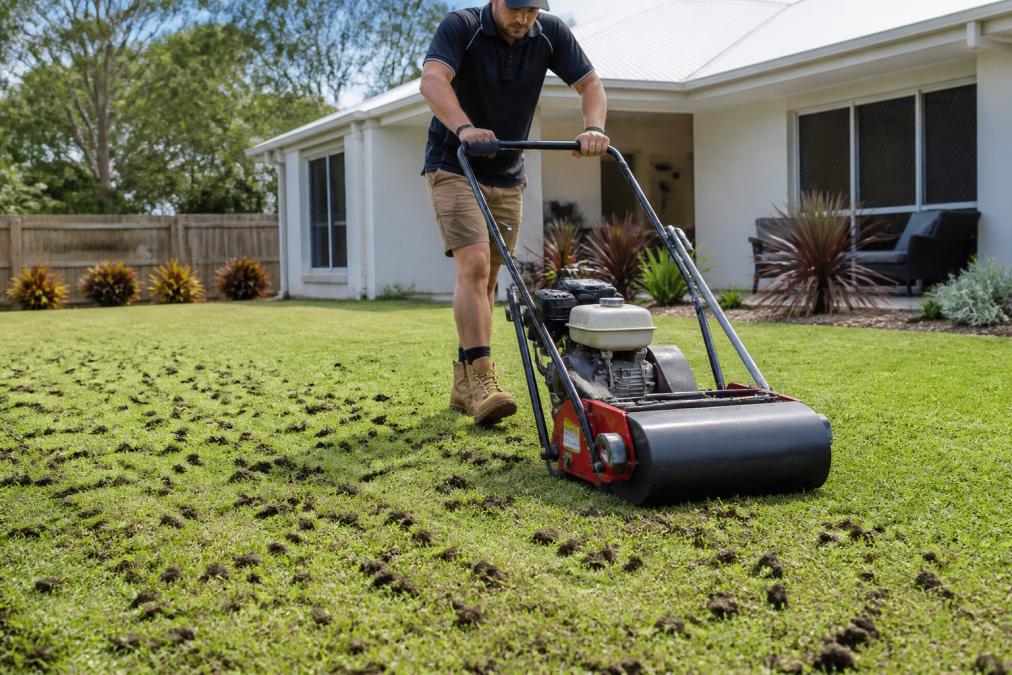
Work slowly enough that the tines can penetrate fully. Rushing creates shallow holes that won't relieve compaction effectively. On very compacted clay, a second pass at right angles to your first can make a real difference. The goal is to create a pattern of openings across the entire lawn.
Before you start, identify any obstacles. Sprinkler heads, garden lights, and underground cables can be damaged by the tines. If you're unsure what's beneath an area, don't aerate it until you've confirmed it's clear. Mark out any exclusion zones before you begin.
After aeration, water the lawn thoroughly. This helps the soil settle and the aeration holes begin their work. If you're planning to top dress, do it within a few days while the holes are still open, the dressing will filter down into the aeration channels.
2. Apply Top Dressing to Clay Soil
Top dressing introduces better-draining material into the compacted clay layer. When combined with aeration, it transforms soil structure over time. Sand-based top dressing is ideal for clay, it fills aeration holes and improves drainage as it works down into the profile.
Apply top dressing at a depth of 3-6 mm across the lawn. Thicker applications can smother grass; thinner ones won't achieve much benefit. Spread it evenly so the grass blades still poke through, you want to see green, not a blanket of sand.
The best time to top dress is after aeration, when the aeration holes are open and ready to receive the material. Water the lawn after top dressing to help it settle and begin working into the soil.
For larger lawns or properties where manual spreading would be tedious, hiring a professional top dresser makes the job much faster and more consistent. The machine spreads material evenly across the entire area, achieving a professional finish without the hard labour.

3. Improve Water Penetration With Soil Wetting Agents
Hydrophobic or water-repellent soil is common in clay-based lawns, especially through hot, dry weather. Water sits on the surface instead of soaking in. Soil wetting agents help rewet the soil profile and improve how effectively water moves through it.
Wetting agents work by reducing the surface tension of water, allowing it to penetrate more evenly into the soil. They're particularly useful in Mackay's warmer months when lawns are under heat stress and water is running off instead of soaking in.
LawnHub WET is a liquid wetting agent you mix with water and apply across the lawn.
4. Add Organic Matter and Soil Conditioners
Organic matter improves clay soil structure by creating stable aggregates, clumps of soil particles that hold together while still allowing water and air to move through. As organic material breaks down, it feeds beneficial microbes that further improve soil health.
5. Loosen Compacted Clay With a Rotary Hoe
For severely compacted clay or when preparing a new garden bed, a rotary hoe breaks up hard ground far more effectively than manual digging. The machine's tines turn over and pulverise the soil, creating a loose, workable seedbed.
6. Create Raised Garden Beds or Mounding
If your clay soil is severely compacted or you want a quicker solution than waiting for aeration and soil amendment to work, raised beds or mounded areas bypass the problem entirely. You're building on top of the clay rather than trying to fix it.
Summary: 7 Ways to Improve Lawn Drainage in Clay Soil
| Method | Best For | Effort Level | Timeline |
|---|---|---|---|
| Core aeration | Compacted lawns, established turf | Low (hire equipment) | 1-2 days |
| Top dressing | Post-aeration, gradual soil improvement | Medium (hire spreader for large areas) | 1 day + weeks to integrate |
| Soil wetting agents | Water repellency, hot-weather stress | Low (liquid or granular application) | 1 day, works 12 weeks |
| Organic matter & conditioners | Long-term soil structure, microbial health | Medium | 1 day + ongoing |
| Rotary hoe | Severe compaction, new beds | Low (hire equipment) | 1 day |
| Raised beds or mounding | Problem areas, quick solution | Medium-High | 1-2 days |
The most effective approach combines several methods. Start with core aeration to relieve compaction, follow with top dressing to introduce better soil material, and use wetting agents to improve water movement through the profile. For long-term results, add organic matter or soil conditioner to build soil structure over time.
Frequently Asked Questions
How do I know if my lawn has poor drainage?
Signs of poor drainage include standing water after rain, soft or spongy patches, moss growth, and persistent muddy areas. Clay soil naturally drains slowly because its fine particles compact easily, reducing pore space. If water sits on your lawn for more than a few hours after rainfall, drainage improvement is needed. Check whether water pools in low spots or runs off rather than soaking in.
Does core aeration help with clay soil drainage?
Yes, core aeration is one of the most effective ways to improve clay soil drainage. A core aerator removes small plugs of soil, creating channels that allow air, water and nutrients to penetrate deeper into the root zone. This relieves compaction that prevents water movement. For clay soil, aeration should be combined with top dressing and soil conditioners for best results. Hire a core aerator from MarKay Outdoors to tackle this step yourself.
What is the best way to amend heavy clay soil for a lawn?
The most effective approach combines multiple methods: aerate to relieve compaction, apply organic matter like compost, use a soil wetting agent to improve water penetration, and top dress with sand or suitable material. A granular wetting agent such as LawnHub BBW helps water penetrate evenly through clay, while a soil conditioner like LawnHub Escort builds stronger soil structure. These amendments work best when applied after aeration as part of a full renovation.
Can top dressing improve drainage in clay-heavy lawns?
Top dressing alone won't solve drainage in heavy clay, but it's essential as part of a complete solution. When applied after aeration, top-dressing material fills the aeration holes and helps water move deeper into the soil profile. The ECO250-S Sand Spreader makes it easy to apply top dressing consistently across your lawn. Combine top dressing with aeration, soil wetting agents and organic matter for lasting drainage improvement.
How often should I aerate a lawn with clay soil?
Clay lawns benefit from aeration at least once per year, ideally in spring or autumn when soil moisture is adequate. High-traffic areas may need aeration twice yearly. Regular aeration prevents recompaction and maintains the drainage improvements you've made. If your lawn hasn't been aerated before, a single treatment combined with top dressing and soil amendment will make a noticeable difference. Hire equipment from MarKay Outdoors to perform aeration yourself on your schedule.
Clay soil drainage doesn't fix overnight, but these methods work. Core aeration and top dressing create the fastest visible improvement. Soil wetting agents and conditioners address the chemistry of water movement. Rotary hoeing and raised beds offer alternatives when the clay is too severe for conventional approaches. The key is choosing the right combination for your specific situation, and having access to the right equipment to get the job done without hiring contractors.