

Table of Contents
- Why Aeration and Topdressing Work Together
- The Benefits of Lawn Aeration for Compacted Soil
- Choosing the Right Topdressing Material
- Step-by-Step: Aeration and Topdressing a Lawn
- Lawn Renovation Equipment Hire: What You Need
- DIY Lawn Renovation Tips for Better Results
- When to Aerate and Topdress in Mackay
- Frequently Asked Questions
Last Updated: September 10, 2026
Why Aeration and Topdressing Work Together
Aeration and topdressing are two halves of the same job. Aeration opens the soil by removing small cores of earth, and topdressing fills those openings with fresh material that feeds the root zone. Run them together and you fix compaction and rebuild soil structure in one pass.
Most lawn problems start below the surface. Foot traffic, mowing and wet weather press the soil down until pore space disappears. Water pools instead of soaking in, roots stay shallow, and the lawn thins out. This guide from MarKay Outdoors walks through the full renovation process, from reading the signs to hiring the right equipment.

The results speak for themselves when the sequence is right.
The Benefits of Lawn Aeration for Compacted Soil
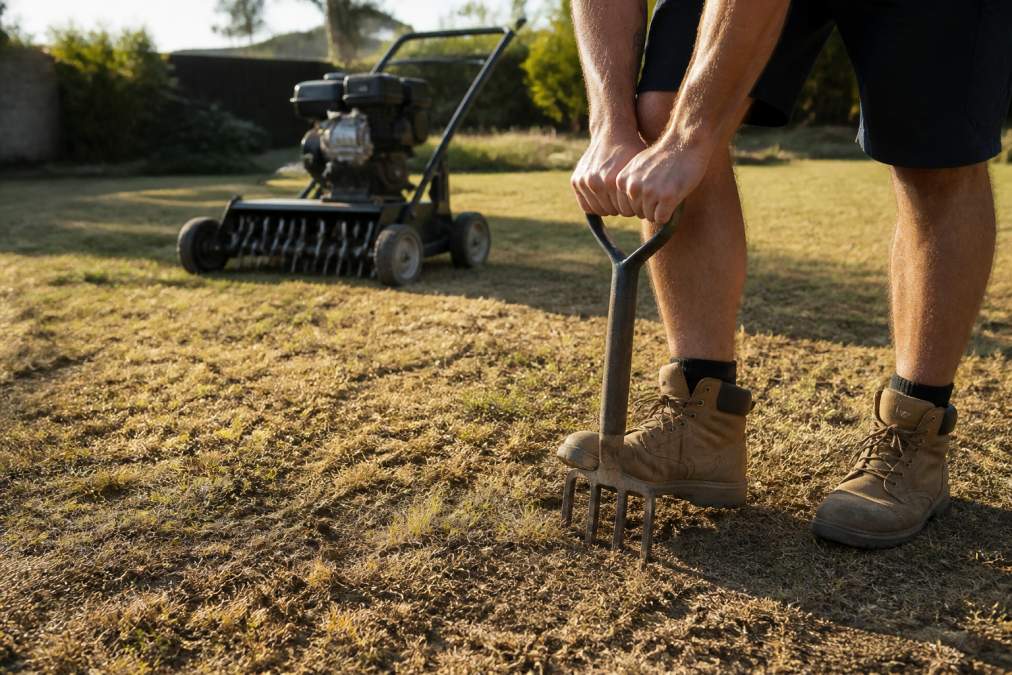
Core aeration is the practice of removing small plugs of soil from a lawn to relieve compaction and restore the movement of air, water and nutrients into the root zone. Unlike spiking, which pushes solid holes into the ground, coring physically lifts material out.
That distinction matters. Solid tines compress soil sideways and can make compaction worse over time. Coring tines create genuine voids that roots can grow into.
For a lawn that has been walked on, parked on or mown for years, those voids are what allow recovery.
Signs Your Lawn Needs Core Aeration
Look for these indicators before you book anything:
- Water pools or runs off after rain instead of soaking in
- The lawn feels hard and unforgiving underfoot
- Grass thins out in high-traffic areas
- Dry patches persist even with regular watering
- Thatch has built up to a noticeable depth
- The soil is difficult to push a screwdriver into
If you're seeing three or more of these, compaction is likely the underlying issue.
Choosing the Right Topdressing Material
The best topdressing material for most lawns is a screened sand and organic blend that matches your existing soil profile. The goal is to fill aeration holes and level minor low spots without smothering the grass.
Getting the material wrong is one of the most common mistakes in lawn renovation. A heavy clay mix on a sandy lawn creates a barrier layer that traps water. A pure sand mix on clay does the same thing in reverse.
Match the material to what's already there. If you're unsure, a blended topdressing mix is the safer choice.
How Much Topdressing to Apply
Apply topdressing in thin layers, generally no more than 6 to 10 millimetres per pass. The material should settle into the aeration holes and work down into the canopy, not bury it.
A practical approach:
- Spread across the lawn in even passes
- Work the material in with a levelling rake
- Water lightly to settle it
- Wait several weeks before adding more if needed
The ECO250-S Sand Spreader & Top Dresser at MarKay Outdoors applies material at up to 6.35 mm per pass, which suits this thin-layer method and keeps coverage consistent across larger areas.

Step-by-Step: Aeration and Topdressing a Lawn
The correct order is mow, dethatch, aerate, topdress, fertilise, water. Skipping the dethatching step means the aerator tines fight through a mat of dead material instead of reaching soil.
Total time: Half a day to a full day for a standard residential lawn, depending on size and how many machines you're running.
What you'll need:
- Dethatcher or scarifier
- Core aerator
- Top dresser or sand spreader
- Levelling rake and roller
- Fertiliser and soil wetter
- Rakes and garden bags for clean-up
Step 1: Mow and prepare. Cut the lawn to a manageable height and clear the area of toys, hoses and debris.
Step 2: Dethatch. Run the dethatcher across the lawn to lift dead grass and organic buildup. Collect the material with rakes and bags.
Step 3: Core aerate. Pass the aerator over the lawn in overlapping runs. Small soil plugs will be left on the surface, which is exactly what you want.
Step 4: Topdress. Spread your screened material in thin, even passes. Work it into the aeration holes with a levelling rake.
Step 5: Fertilise and water. Apply a slow-release fertiliser and water it in thoroughly.
Lawn Renovation Equipment Hire: What You Need
Hiring lawn renovation equipment makes sense when you're tackling a one-off project rather than maintaining a fleet of machines. A core aerator weighs well over 100 kilograms, needs fuel, storage and servicing, and might only come out once or twice a year.
MarKay Outdoors runs a dry-hire model, which means you collect the equipment, operate it yourself and return it when you're done. The Aerator Hire Mackay package includes the trailer in the hire price, so there's no lifting a heavy machine into a ute.

For a complete renovation, the Lawn Care Equipment Hire Mackay package bundles a dethatcher, core aerator, rakes and garden bags on a single trailer.
Equipment |
Best For |
What's Included |
|---|---|---|
Lawn Aerator & Trailer |
Relieving compaction before topdressing |
Core aerator, transport trailer |
Lawn Care Trailer |
Full renovation with thatch removal |
Dethatcher, core aerator, rakes, bags, trailer |
ECO250-S Top Dresser |
Spreading sand and topdressing mixes |
Self-propelled spreader, 326 L hopper |
Levelling Rake & Roller |
Finishing and levelling after topdressing |
Rake, water roller |
If you're not sure which machine suits your situation, the team can talk you through the difference between a dethatching job and a compaction job before you book.
DIY Lawn Renovation Tips for Better Results
Soil moisture is the single biggest factor in whether aeration works. Coring tines need enough give in the ground to pull plugs cleanly. On bone-dry soil they bounce and tear instead.
Water the lawn well a day or two before you aerate. The soil should be moist but not waterlogged.
A few other things that make a real difference:
- Mark irrigation lines, garden lighting cables and buried wiring before you start. Coring tines will find them otherwise.
- Leave the soil plugs on the surface. They break down and return organic matter to the lawn.
- Work in overlapping passes rather than trying to cover everything in one run.
- Don't topdress and fertilise on the same day if heavy rain is forecast.
When to Aerate and Topdress in Mackay
The best time to aerate and topdress in this region is during the active growing season, when the lawn can recover quickly from the disruption. Warm-season grasses respond best when they're actively putting on growth.
Avoid renovating in the middle of a cold snap or during extended dry periods. Stressed grass recovers slowly and the open aeration holes can dry out.
For most lawns, a full renovation once a year is plenty. Heavily used lawns or those on compacted clay may benefit from a lighter aeration pass more often.
Pair the renovation with a soil wetter if your lawn has developed water-repellent patches. LawnHub BBW granular soil wetter and LawnHub WET liquid wetter both help irrigation and rainfall reach the root zone rather than running off. Follow with LawnHub Trojan slow-release fertiliser, and support recovery with LawnHub ROOTS N SHOOTS in the weeks after.
All of these are stocked locally at MarKay Outdoors in Pleystowe.
Frequently Asked Questions
What is the best time of year for lawn aeration and topdressing?
In Mackay's warm climate, the best time is during active growth in spring or early autumn when the lawn can recover quickly. Warm-season grasses like buffalo, couch, and kikuyu respond well when soil is moist but not waterlogged. Avoid aerating in the middle of winter when growth slows, or during extended dry spells when the soil is too hard for the tines to penetrate effectively.
How does core aeration improve soil health?
Core aeration removes small plugs of soil from the lawn, which relieves compaction and creates pathways for air, water, and nutrients to reach the root zone. Unlike solid spiking, core aeration physically removes material, creating space in compacted soil. This encourages deeper root development and helps topdressing material work into the soil profile more effectively.
What materials should be used for topdressing a lawn?
Use materials that match your existing soil type, such as washed sand, screened compost, or a blended topdressing mix. The material should be dry, well-screened, and free of large debris so it spreads evenly. For larger areas, a self-propelled top dresser can distribute material more consistently than manual spreading with a shovel and rake.
Can I perform lawn renovation using dry-hire equipment?
Yes. Dry-hire equipment lets you complete a lawn renovation yourself without buying machines you will only use occasionally. Core aerators, dethatchers, and top dressers are available for hire with trailers included, so you can collect the equipment, complete the job over a weekend, and return it. This suits homeowners and contractors tackling compacted soil, thatch buildup, or uneven lawns.