

Table of Contents
- What Professional Lawn Topdressing Actually Does
- Lawn Aeration and Topdressing Benefits: Why They Work Together
- How to Use a Lawn Top Dresser: Step-by-Step
- When to Topdress a Lawn in Queensland
- How Often Should You Topdress for Best Results?
- Fixing Uneven Lawn Surfaces With Topdressing
- Equipment You Need for a Professional-Standard Topdress
- Common Topdressing Mistakes to Avoid
- Frequently Asked Questions
Last Updated: September 12, 2026
What Professional Lawn Topdressing Actually Does
Lawn topdressing is the practice of spreading a thin, even layer of sand, soil or compost over an established lawn so the material settles into the surface and works its way down to the root zone. It is not a cosmetic dusting. Done properly, it changes the structure of the soil your grass is actually growing in.
The benefits of professional lawn topdressing come down to three things: a smoother surface, better water and nutrient movement into the soil, and stronger root development underneath. This guide from MarKay Outdoors breaks down how each of those happens, when to do the work, and what equipment gets you a result that looks deliberate rather than patchy.
Here is the part most DIY guides skip. Topdressing on its own does very little if the soil beneath is compacted. You are essentially pouring good material onto a sealed surface. That is why the job works best when it follows aeration, and why the two are almost always discussed together.
Lawn Aeration and Topdressing Benefits: Why They Work Together
The lawn aeration and topdressing benefits compound when you do them in the right order. Aeration opens the soil; topdressing fills the openings with material that improves structure. Skip the first step and the second one sits on top doing nothing useful.
Relieving Compaction Before You Topdress
Compacted soil is the underlying problem on most tired lawns. Foot traffic, mowing and heavy rain all press the particles together until water pools on the surface instead of draining through.
Core aeration removes small plugs of soil from the lawn, which relieves that compaction and creates pathways for air, water and nutrients to reach the root zone. Once those channels exist, topdressing material has somewhere to go. It drops into the holes, sits against the roots, and gradually blends into the soil profile.
Do it the other way around and you waste both passes. The topdressing bridges across the compacted surface, the grass roots stay shallow, and a few weeks later you are back where you started.
How Topdressing Improves Sandy and Clay-Heavy Soils
Soil type decides what you should be spreading, and the two extremes need opposite treatments.
Sandy soils drain fast and hold almost no nutrients. Water and fertiliser move straight past the root zone. On these lawns, topdressing with a compost-rich blend adds the organic matter and water-holding capacity the sand is missing.

Clay-heavy soils do the reverse. They hold water, swell, and stay waterlogged after heavy rain. A sand-based topdressing worked into the top layer improves drainage and reduces that swelling.
The rule of thumb is to topdress with material that is similar to, or slightly coarser than, what you already have. Match too closely and you change nothing. Go too far the other way and you can create a layered profile that drains badly at the boundary.
How to Use a Lawn Top Dresser: Step-by-Step
Using a lawn top dresser correctly is mostly about preparation and restraint. The machine spreads material evenly and quickly, but it cannot fix a lawn that has not been aerated, and it will happily bury your grass if you set the rate too high.
Total time: roughly 2 to 3 hours for an average residential block, plus drying time. Difficulty: beginner-friendly, but heavy on the back if you do it by hand.
What You'll Need
- A core aerator, ideally hired with a trailer so transport is sorted
- A walk-behind top dresser or sand spreader
- Topdressing material: washed sand, screened soil, or a compost blend matched to your soil type
- A levelling rake and a water roller for finishing
- A hose for light watering after the job
Step 1: Mow and Aerate First [Time: 45-60 minutes]
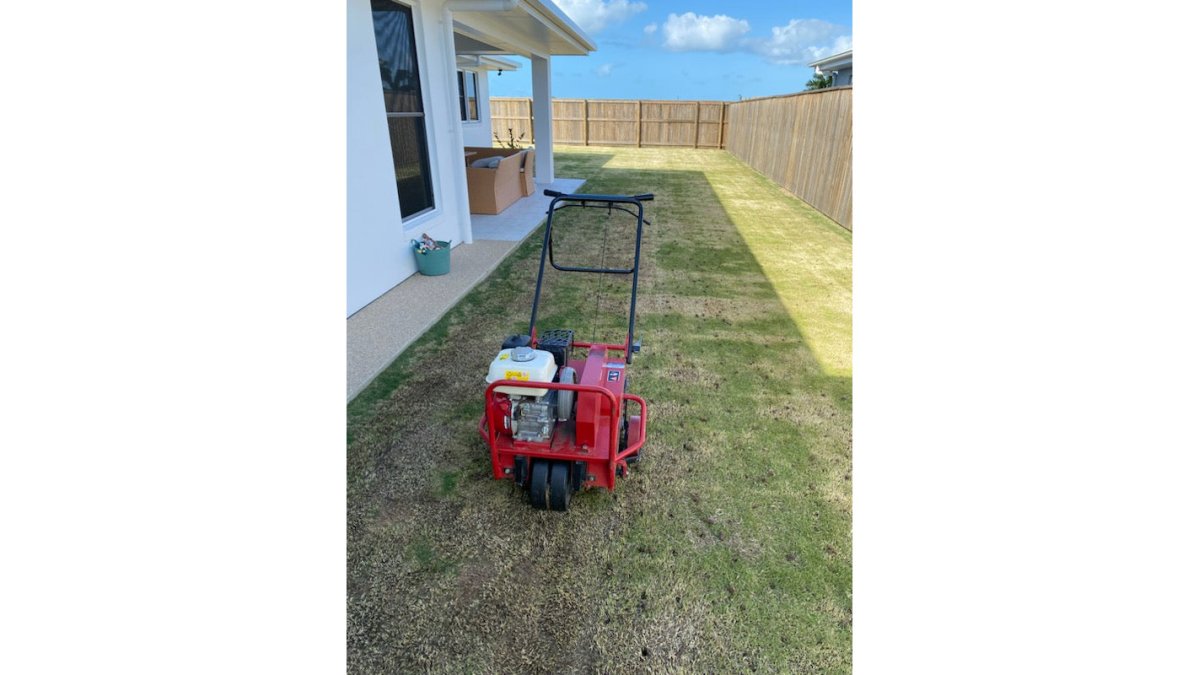
Cut the lawn slightly shorter than usual and remove the clippings. Then run the core aerator over the whole area in two passes at right angles. You should see a consistent pattern of plugs across the surface.

Expected result: a lawn covered in small cores, with visible holes across the full area.
Step 2: Set Your Material and Spread Rate [Time: 10 minutes]
Load the top dresser and set the spread rate low. You want a layer roughly 5 to 10 millimetres deep, no more. If you can still see the grass blades poking through the material, you have it about right.
Step 3: Spread in Overlapping Passes [Time: 30-45 minutes]
Work in straight lines and overlap each pass by about half the spread width. Change direction for the second pass. This is what separates an even result from a striped one.
Step 4: Work the Material In [Time: 20-30 minutes]
Drag a levelling rake across the surface to push material into the aeration holes and knock down any high spots. Follow with a water roller to settle it. Water lightly afterwards to wash the remaining material off the leaf blades.

Choosing the Right Topdressing Material
Washed sand is the standard choice for levelling and for clay soils because it drains freely and does not compact. Screened soil or a sand-and-compost blend suits sandy ground where you need to add organic matter. Straight compost is rich but can hold too much moisture on heavy clay, so it is usually blended rather than used alone.
Buy more than you think you need. Running short halfway through a lawn leaves an obvious seam that takes months to blend out.
When to Topdress a Lawn in Queensland
The best window is during the active growing season, when the grass can recover and grow through the material. In this climate that generally means spring through early autumn, with the warm-season grasses most common here doing their strongest growth over the warmer months.
Avoid the coldest part of winter. Growth slows, the grass does not push through the topdressing, and material can sit on the surface for weeks. The same applies during a dry spell, so water the lawn well in the days before you start.
If you are combining aeration and topdressing, do both in the same session. Aerating in one season and topdressing in another splits the benefit and doubles the disruption.
How Often Should You Topdress for Best Results?
Once a year is enough for most established lawns. Lawns that are being levelled after renovation, or that sit on poor soil, often benefit from a lighter application twice a year until the surface and structure improve.
Frequency matters less than depth. A thin layer applied regularly does more for the lawn than a thick layer applied occasionally. Heavy applications bury the crown, weaken the grass, and leave you with dead patches that need re-seeding.
For a lawn in reasonable condition, one annual pass in the growing season keeps the surface level and the soil structure improving. If you are working through a badly compacted or uneven lawn, plan on two lighter passes a year for the first couple of seasons, then drop back to one.
Fixing Uneven Lawn Surfaces With Topdressing
Topdressing is the standard fix for a lumpy or dipping lawn, and it works by building up the low spots gradually rather than filling them in one go. Add too much at once and you smother the grass in exactly the area you were trying to repair.
The technique is straightforward. Identify the low spots, apply a thin layer across the whole lawn, and concentrate slightly more material in the hollows. Work it in with a levelling rake so the transition between high and low blends rather than creating a step.
Repeat over successive growing seasons. A dip that is 20 millimetres deep might take two or three light passes to correct properly. That sounds slow, but it produces a surface that drains evenly and a lawn that stays healthy through the process.
Equipment You Need for a Professional-Standard Topdress
The gap between a passable DIY topdress and a professional-standard one is almost entirely equipment. Spreading material by shovel and barrow gives you an uneven layer, sore shoulders, and a job that takes a full weekend.
A core aerator is the starting point, since topdressing without aeration wastes the material. MarKay Outdoors hires a core aerator package with trailer included, which handles both the aeration pass and the transport in one booking.
From there, a top dresser or sand spreader does the spreading. The ECO250-S sand spreader and top dresser is built for fine materials like washed sand and spreads them consistently across a full lawn, which is the part that is genuinely difficult to do by hand.
For finishing, a levelling rake and water roller bundle lets you work the material into the aeration holes and settle the surface. If the soil underneath is badly compacted or you are breaking up old turf before starting, a rotary hoe handles that preparation stage.
Job Stage |
Equipment |
Why It Matters |
|---|---|---|
Relieving compaction |
Core aerator |
Opens the soil so topdressing has somewhere to settle |
Spreading material |
Top dresser or sand spreader |
Even coverage without streaks or seams |
Finishing the surface |
Levelling rake and water roller |
Pushes material into holes and settles the layer |
Soil preparation |
Rotary hoe |
Breaks up compacted ground and old turf first |
All of this is dry hire equipment, which means you collect it, operate it yourself, and return it when the job is done. For a homeowner working through a single weekend, that is a far more practical option than buying machinery you will use once a year.
Common Topdressing Mistakes to Avoid
Spreading too thick is the mistake that causes the most damage. A layer deeper than about 10 millimetres buries the grass crown, and the lawn will thin out or die back in patches. Thin and repeat beats thick and once.
Skipping aeration is the second big one. Without holes to work into, material sits on the surface, smothers the leaf, and does nothing for the soil underneath.
Other frequent errors:
- Topdressing a wet, waterlogged lawn and smearing the surface
- Using material that is too fine or too different from the existing soil
- Leaving material on the grass blades instead of washing it in
- Starting the job without enough material and leaving a visible seam
- Topdressing in the cold months when the grass will not grow through it
Get the sequence right, aerate first, spread thin, work it in, and water, and the lawn responds quickly. Get it wrong and you spend the next season repairing the damage.
A level, healthy lawn comes down to preparation and the right machinery, and doing it by hand rarely gets you there. MarKay Outdoors provides dry hire equipment so you can aerate, spread and finish the job yourself, with easy online booking, flexible same-day, 24-hour and multi-day hire, trailer-ready equipment packages, and a range of well-maintained, dependable compact equipment for lawn renovation and property work. Get started with MarKay Outdoors and hire the gear that makes your next topdressing job look like it was done properly.
Frequently Asked Questions
What are the main benefits of topdressing a lawn?
Topdressing smooths uneven surfaces, improves soil structure and helps level out bumps and hollows that make mowing awkward. A thin layer of sand or compost works its way into the soil profile, improving drainage in clay-heavy ground and helping sandy soils hold moisture and nutrients better. It also encourages stronger root growth and a denser lawn over time. For lawns that have become spongy or patchy, combining topdressing with core aeration gives the best results.
When is the best time to topdress a lawn in Queensland?
The ideal window is during active growth periods, typically spring and early summer when warm-season grasses are growing strongly. In Queensland's climate, this generally means September through to February. Avoid topdressing in the middle of winter when growth slows, as the grass may struggle to grow through the applied layer. Early autumn can also work if you want to repair surface unevenness before cooler months set in.
Does topdressing help with uneven lawn surfaces?
Yes, levelling uneven ground is one of the most common reasons people topdress. By applying thin layers of sand or topdressing mix over low spots and working it in with a levelling rake, you can gradually build up hollows without smothering the grass. Multiple light applications over several weeks work better than one thick layer. A roller can help firm the surface after spreading.
How often should you topdress your lawn for optimal results?
Most lawns benefit from topdressing once or twice a year during the growing season. If you are levelling significant unevenness, you may need three or four lighter applications spread across a few months. Overdoing it in a single session can smother the grass, so keep layers thin, around 5 to 10 millimetres at a time. Lawns on sandy or poor soil may need more frequent applications to build up organic matter.
Can topdressing improve soil quality in sandy or clay-heavy areas?
Yes. In sandy soils, topdressing with compost or organic mixes helps the soil retain water and nutrients that would otherwise drain away quickly. In clay-heavy soils, a sand-based topdressing improves drainage and reduces waterlogging. The key is matching your topdressing material to your soil type. For clay, avoid adding more clay-rich material. For sand, avoid straight sand and choose a mix with organic content.
What equipment is required for professional-standard topdressing?
A dedicated top dresser or sand spreader gives the most even coverage, especially on larger lawns. A levelling rake helps work the material into low spots, and a roller firms the surface afterwards. For best results, core aerate first to relieve compaction, then apply your topdressing. In Mackay, you can hire a top dresser, aerator, levelling rake and roller as a package, which suits DIY homeowners and contractors wanting a professional finish without buying the gear.