

Table of Contents
- Best Lawn Fertilisers for Tropical Climates: Quick Comparison
- Why Tropical Lawns Need Different Fertiliser
- Best Fertiliser for Warm-Season Grass
- Slow-Release Lawn Fertiliser: Steady Feeding for Hot Months
- When to Fertilise Tropical Grass
- Lawn Fertiliser Application Rate: Getting the Dose Right
- Frequently Asked Questions
Last Updated: October 7, 2026
Best Lawn Fertilisers for Tropical Climates: Quick Comparison
Tropical lawns face unique challenges. High heat, intense rainfall, and year-round growing seasons demand the best lawn fertilisers tropical climates require, products designed specifically for warm-season conditions. The best lawn fertilisers for tropical climates deliver nutrients steadily over weeks rather than all at once, preventing nutrient burn while supporting the vigorous growth these grasses demand.
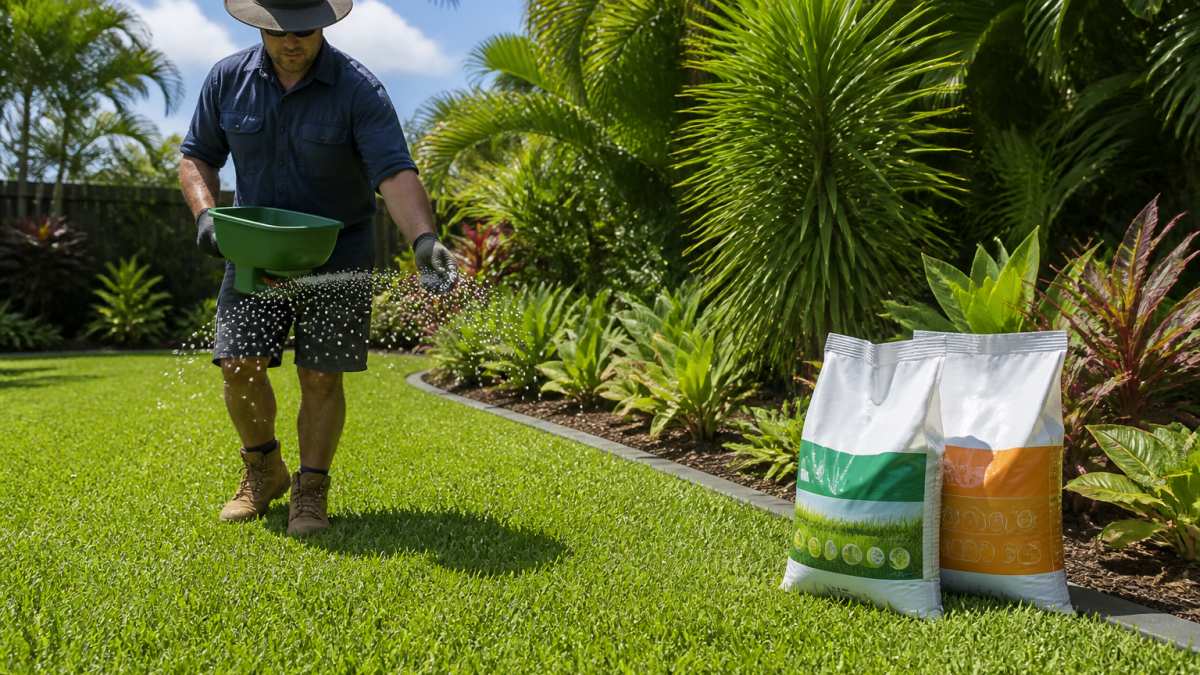
At MarKay Outdoors, we understand that tropical lawn care requires the right nutrition. Whether you're maintaining buffalo, couch, kikuyu, or zoysia grass in warm climates, choosing a fertiliser matched to your grass type and season makes the difference between a struggling lawn and one that thrives.
This guide covers the best lawn fertilisers tropical regions offer and what's available locally, what makes them work in heat, and how to apply them correctly. We've focused on products stocked by MarKay Outdoors.
| Fertiliser | Type | NPK | Release Period | Best For | Price |
|---|---|---|---|---|---|
| LawnHub Trojan | Granular | 25:0:10 + 2.5% Fe | 12 weeks | Warm-season feeding, spring/summer | $33.88 |
| LawnHub THREEWAY | Liquid | 15:4:8 | Immediate + controlled release | Maintenance between granular feeds | $28.95 |
| LawnHub Mini Pill | Granular | Slow-release pellets | Long-term | Set-and-forget feeding, low maintenance | $52.88 |
| LawnHub Money Shot | Liquid | Fast-acting | 3 days visible results | Quick green-up before events | $29.88 |
| LawnHub ROOTS N SHOOTS | Liquid supplement | Kelp + N | 4-week reapplication | Recovery after renovation, stress periods | $29.95 |
Why Tropical Lawns Need Different Fertiliser
Warm-season grasses grow aggressively when conditions are right. This constant growth demands steady nutrient supply, but tropical conditions complicate feeding. Heavy rainfall leaches nutrients from soil quickly, while intense heat can damage grass if you apply too much nitrogen at once.

Tropical lawns also experience different seasonal patterns than temperate regions. Rather than a spring growth flush, warm-season grasses grow most actively during the warmer months and slow down only slightly in cooler periods. This means your fertiliser program needs to support growth across most of the year, not just spring and summer.
A slow-release fertiliser works better than a fast-acting one for tropical conditions because it matches the grass's natural growth pattern. Instead of a growth spike followed by a nutrient crash, slow-release products feed your lawn gradually over weeks, keeping nutrient levels steady. This approach reduces the risk of nutrient burn (visible as brown patches) and supports consistent, healthy growth.
Best Fertiliser for Warm-Season Grass
LawnHub Trojan 5kg Slow Release Fertiliser ($33.88) stands out as the go-to choice for warm-season feeding through spring and summer. With an NPK analysis of 25:0:10 plus 2.5% iron, it delivers high nitrogen for strong leaf growth while the iron supports deep green colour.
The controlled-release formulation feeds your lawn for up to 12 weeks, which means you apply it less frequently than liquid fertilisers. A single 5kg bucket covers approximately 200m², making it economical for larger lawns. Apply at 2.5kg per 100m² and water in immediately with at least 10mm of water to activate the nutrients.
Trojan suits all common established lawn varieties in tropical regions: buffalo, couch, kikuyu, zoysia, tall fescue, and ryegrass. The high nitrogen content supports the vigorous growth these grasses demand during warm months, and the iron helps maintain colour even under heat stress.
What makes Trojan work for tropical conditions is its timing. Apply it in spring as growth accelerates, then reapply mid-summer if needed. The 12-week release window means you're not reapplying every few weeks like you would with liquid feeds.
Slow-Release Lawn Fertiliser: Steady Feeding for Hot Months
Slow-release fertilisers are the backbone of tropical lawn care. Unlike liquid feeds that deliver nutrients immediately (and wash away quickly in rain), slow-release granules release nutrients gradually as soil moisture and temperature fluctuate. This matches how warm-season grasses actually take up nutrients.
LawnHub Mini Pill 150SGN Fine Lawn Fertiliser ($52.88) represents the premium end of slow-release feeding. The mini pellet formulation spreads evenly and breaks down slowly with watering, making it ideal for homeowners wanting low-maintenance lawn care. Mini Pill encourages strong root development and turf density without the surge growth associated with liquid fertilisers.

For a more economical slow-release option, Trojan delivers the same controlled-release principle at a lower price point. Both products work by coating nutrients in a resin that breaks down over time, releasing nitrogen, phosphorus, and potassium as soil conditions allow.
The advantage of slow-release over liquid is clear in tropical heat. A single application of granular fertiliser can feed your lawn for 10-12 weeks, whereas liquid feeds require reapplication every 4 weeks or more frequently after heavy rain. Over a growing season, slow-release saves time and money.
Apply slow-release fertilisers evenly across the lawn. Use a spreader if you have one, or distribute by hand if your lawn is small. Water in thoroughly after application to activate the nutrients and help the granules settle into the soil.
When to Fertilise Tropical Grass
Timing matters more in tropical climates than in temperate regions because growth patterns are different. Warm-season grasses don't have a dormant winter period in tropical areas; they slow down but continue growing year-round.
LawnHub Trojan 5kg Slow Release Fertiliser →
Apply slow-release fertilisers like Trojan during the warmer growing season, typically spring through early autumn. A single application in late spring will feed your lawn through summer. If your lawn shows signs of nutrient deficiency mid-summer (pale colour, slower growth), a second application can extend nutrition through late summer and early autumn.
For cooler months, consider switching to LawnHub PREMATURE 5kg Lawn Fertiliser ($36.95) if your region experiences a distinct cooler season. With an NPK of 20:0:16 plus 6% iron, it's designed to maintain colour and turf strength as growth naturally slows. Apply PREMATURE in autumn and early winter for cooler-season feeding.
Liquid fertilisers like LawnHub THREEWAY ($28.95) work well as a maintenance feed between granular applications. Mix 100-200mL in 6-10L of water per 100m² and apply evenly across the lawn. The 15-4-8 formulation with controlled-release nitrogen maintains nutrient availability between your main granular feeds.

For a quick green-up before an event or inspection, LawnHub Money Shot ($29.88) delivers visible results within 3 days. Apply 200-400mL per 100m² mixed with 5-10L of water, sprayed evenly onto the lawn leaf. Apply during the cooler part of the day and avoid application above 30°C.
Lawn Fertiliser Application Rate: Getting the Dose Right
Applying the correct rate is critical. Too little fertiliser and your lawn won't get the nutrition it needs. Too much and you risk nutrient burn, which shows as brown patches and weakened grass.
For granular slow-release fertilisers, the standard rate is 2.5kg per 100m². This means a 5kg bucket covers approximately 200m². Weigh or estimate your lawn size before applying. If you're unsure, it's better to apply slightly less than the recommended rate than to over-apply.
Spread granular fertiliser evenly across the lawn. If you have a spreader, use it. For smaller lawns, you can distribute by hand, dividing the bucket into sections and applying to each section evenly. Once applied, water immediately with at least 10mm of water to activate the controlled-release nutrients and wash the granules into the soil.
For liquid fertilisers, follow the label rate carefully. THREEWAY requires 100-200mL per 100m² mixed in 6-10L of water. Money Shot requires 200-400mL per 100m² mixed in 5-10L of water. The difference in concentration matters, applying too much liquid fertiliser can damage foliage or cause nutrient burn.
Apply liquid fertilisers during the cooler part of the day to reduce evaporation and allow better leaf uptake. Early morning or late afternoon is ideal. Avoid application when temperatures are above 30°C.
Always read and follow the product label before use. The label contains the most current application rates, watering requirements, and safety information specific to your grass type and region.
Choosing the right fertiliser for tropical conditions means matching the product to your grass type, season, and lawn health. Slow-release granular fertilisers like LawnHub Trojan provide the steady nutrition warm-season grasses demand, while liquid feeds offer flexibility for maintenance and quick green-ups. MarKay Outdoors stocks the full range of LawnHub lawn care products locally in Mackay, so you can pick up what you need without waiting for interstate delivery. Beyond fertiliser, healthy tropical lawns also benefit from proper aeration and topdressing. Lawn Care Equipment Hire Mackay including Aerator Hire Mackay and Top Dresser Hire Mackay can help you prepare your lawn for optimal nutrition uptake.
Frequently Asked Questions
What is the best fertiliser for a tropical lawn?
The best fertiliser for tropical lawns depends on the season. LawnHub Trojan (25:0:10 + 2.5% iron) works well for spring and summer feeding, delivering strong growth and colour for up to 12 weeks. For cooler months, LawnHub Premature (20:0:16 + 6% iron) maintains colour when growth slows. Both are slow-release granular options suited to warm-season grasses like buffalo, couch and kikuyu.
How often should you fertilise warm-season grass?
Warm-season grasses in tropical climates benefit from regular feeding during the growing season. Granular slow-release fertilisers like LawnHub Trojan feed for up to 12 weeks, so you'd typically apply once per season. Between applications, liquid fertilisers such as LawnHub Threeway (15-4-8) can be applied every 4-6 weeks to maintain colour and growth. Always follow the product label for specific timing.
Is slow-release fertiliser better for tropical lawns?
Slow-release fertilisers are excellent for tropical lawns because they deliver steady nutrition over weeks, reducing the risk of nutrient burn in hot, wet conditions. LawnHub Trojan and Premature are both slow-release options that feed for 10-12 weeks. They work particularly well in Mackay's warm climate, where rapid nutrient release can wash away or cause damage. Slow-release also reduces the need for frequent applications.
Can you fertilise a lawn during hot weather?
Yes, but with caution. Granular slow-release fertilisers can be applied year-round if you water in thoroughly. Liquid fertilisers like LawnHub Money Shot should be applied during cooler parts of the day (early morning or late afternoon) and avoided when temperatures exceed 30°C, as heat increases evaporation and can stress the lawn. Always water in after application to activate nutrients and reduce burn risk.