
Table of Contents
- Dethatcher Rental Cost Per Day 2026
- How to Use a Dethatcher: Operating Basics
- Best Time of Year to Dethatch Lawns
- Lawn Renovation Equipment Hire Options Beyond the Dethatcher
- Factors That Influence Dethatcher Rental Pricing
- Seasonal Demand and Availability
- Making the Hire Decision: Is Renting Worth It?
- Frequently Asked Questions
Last Updated: September 23, 2026
Dethatcher Rental Cost Per Day 2026
A dethatcher is a mechanical machine that removes built-up thatch, dead grass, and organic debris from your lawn. If you're planning a lawn renovation in Mackay, understanding dethatcher rental costs helps you budget accurately and choose the right hire option for your project. At MarKay Outdoors, we help homeowners and tradies tackle lawn preparation without the expense of purchasing equipment they'll use once.

The dethatcher rental cost per day varies based on hire duration and whether you need the machine alone or as part of a complete lawn renovation package. Same-day hire typically costs less than 24-hour options because you're returning the equipment the same day. For a single dethatcher, expect straightforward pricing that reflects the machine's value and the convenience of local pickup.
Below, we'll break down what affects your costs, when you're most likely to need this equipment, and whether hiring makes sense for your lawn project.
How to Use a Dethatcher: Operating Basics
Using a dethatcher is straightforward if you follow the right sequence. The machine works by pulling thatch and dead grass up through the lawn surface, which you then collect and remove.
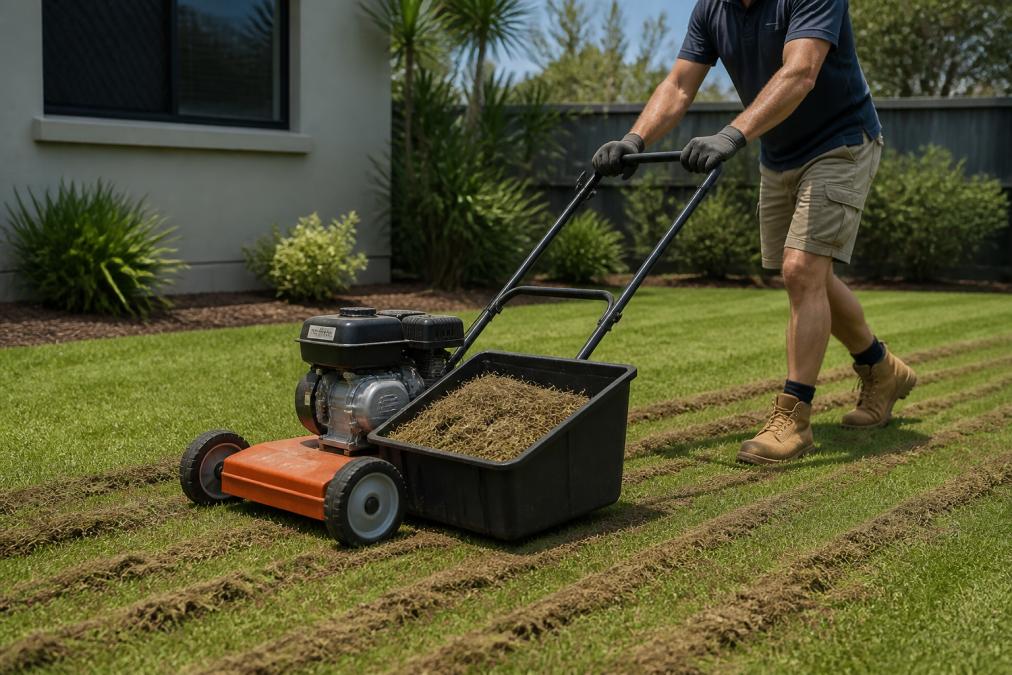
Start by mowing your lawn to a short height, roughly 25-30 mm. This gives the dethatcher better access to the thatch layer without the green grass getting in the way. Adjust the machine's depth setting so the tines reach the thatch but don't dig into soil.
Work in straight, overlapping passes across your lawn, similar to mowing. Move at a steady pace; rushing won't improve results and may strain the equipment. Empty the collection tray when it fills, as a full hopper reduces efficiency.
After dethatching, you'll have significant debris to clear. Rake the lawn thoroughly and bag or compost the material. This cleanup step is crucial because leaving thatch scattered across the lawn defeats the purpose of the work.
Common mistakes include setting the depth too shallow (thatch remains) or too deep (you damage the grass and soil). Another frequent error is dethatching when the soil is waterlogged; the machine becomes harder to push and can compact wet soil. Aim for dry conditions and firm ground.
Best Time of Year to Dethatch Lawns
Timing your dethatcher rental cost decision around the right season matters more than most people realise. The best time to dethatch depends on your grass type and local climate.
In Mackay's subtropical climate, spring (September to November) is ideal. Warm soil, increasing moisture from spring rains, and active grass growth mean your lawn recovers quickly after the stress of dethatching. Autumn (March to May) is your second-best window, offering similar recovery conditions without the extreme heat.
Avoid dethatching in summer when heat stress is high and grass growth slows. Winter dethatching is possible but less effective because cool-season growth is minimal and recovery takes longer.
If your lawn is severely thatched or you're planning a full renovation, spring dethatching followed by core aeration and top dressing creates the ideal sequence. The dethatcher removes the dead layer, aeration relieves soil compaction, and top dressing fills low spots and introduces fresh material.

Seasonal demand affects availability. Spring is peak season for lawn equipment hire across Mackay, so booking early ensures you get your preferred dates.
Lawn Renovation Equipment Hire Options Beyond the Dethatcher
A dethatcher alone handles thatch removal, but a complete lawn renovation typically requires two or three stages. Understanding what equipment works alongside dethatching helps you plan a more effective project.

Core aeration follows dethatching logically. Where the dethatcher removes dead material, an aerator relieves soil compaction by extracting small plugs of soil. This opens pathways for water, air, and nutrients to reach grass roots. Many Mackay homeowners hire both machines sequentially or rent them together as a package.
Top dressing comes after aeration. A top dresser spreads sand, compost, or soil mix across the lawn to fill low spots, level uneven areas, and introduce fresh growing medium. This is particularly valuable after aeration, as the plugs removed leave small holes that benefit from topdressing material.
Some projects need only dethatching; others benefit from all three stages. A lawn that's simply thick with thatch but has decent soil and no compaction might need only the dethatcher. A neglected lawn with poor drainage and bare patches typically needs the full sequence.
MarKay Outdoors offers a Lawn Care Equipment Hire Mackay package that includes the dethatcher, core aerator, rakes, and garden bags on a single trailer. This approach simplifies transport and ensures you have the right equipment for a complete renovation without multiple trips.
Factors That Influence Dethatcher Rental Pricing
Several practical factors determine what you'll pay when you hire a dethatcher. Understanding these helps you anticipate costs and make realistic budget decisions.
Dethatcher Hire Mackay | Lawn Scarifier →
Hire duration is the primary cost driver. Same-day hire (pickup and return the same day) costs less than 24-hour hire because the equipment spends less time in your possession and the business can potentially hire it again the same day. If your lawn is small to medium-sized, same-day hire often suffices. Larger properties or those requiring cleanup time may justify the 24-hour option.
Machine size and type matters, though most rental dethatcher models are comparable. A standard walk-behind dethatcher suits residential properties up to roughly 1,000 square metres. Larger commercial-grade machines exist but are less common in local hire fleets and typically cost more.
Seasonal demand influences pricing indirectly. During peak spring season, equipment is in high demand, which can affect availability and occasionally pricing. Off-season hiring (winter, early summer) sometimes offers better availability, though demand is lower for a reason: conditions are less ideal for lawn work.
Package deals reduce per-item costs. Hiring a dethatcher alone costs more per machine than hiring it as part of a lawn renovation package. MarKay Outdoors offers combined packages where the dethatcher, aerator, rakes, and trailer are bundled, which typically represents better value than hiring equipment separately.
Location and delivery affect total cost. Local pickup in Mackay avoids delivery fees and is the most economical option. Some hire businesses charge extra for delivery or require minimum order values.
Equipment condition and maintenance influence pricing. Well-maintained machines with reliable engines and sharp tines perform better and reduce frustration on the job.
| Factor | Impact on Cost | Notes |
|---|---|---|
| Same-day hire | Lower | Best for small to medium lawns |
| 24-hour hire | Higher | Allows time for cleanup and larger properties |
| Seasonal demand | Variable | Spring peak; winter typically quieter |
| Package rental | Lower per item | Dethatcher + aerator + trailer more economical |
| Local pickup | Lowest total | No delivery fees; convenient access |
| Equipment age | Variable | Newer machines may cost slightly more |
Seasonal Demand and Availability
Spring demand for dethatcher rental cost bookings peaks across Mackay because homeowners and tradies schedule lawn renovations when conditions favour recovery. September through November sees the highest activity. Availability tightens, and booking windows narrow.
Autumn (March to May) offers a secondary peak with better availability than spring but still good conditions for lawn work. Summer (December to February) sees lower demand because heat stress makes dethatching less ideal, and many people defer lawn projects. Winter (June to August) is quietest, with minimal bookings.
Booking early during peak season ensures you get your preferred dates and avoid last-minute scrambles. Off-season hiring sometimes offers flexibility, but you're working against seasonal conditions: recovery is slower and grass growth minimal.
Weather also affects real-world availability. Heavy rain can make soil too wet for dethatching or aerating; you may need to reschedule. Dry spells create ideal conditions but can also mean soil is hard and equipment is in high demand.
Making the Hire Decision: Is Renting Worth It?
Deciding whether to rent a dethatcher depends on your lawn size, project frequency, and how much the equipment costs to purchase versus hire.
For most homeowners, renting makes clear sense. A quality dethatcher costs thousands of dollars to buy; you'll use it once or twice in a decade. Rental gives you professional equipment for a specific project without the capital outlay or long-term storage burden.
Tradies and landscapers who regularly perform lawn renovations might justify purchasing if they book dethatcher work frequently. But even many professionals hire rather than buy because it frees up capital and eliminates maintenance responsibility.
The real question is whether your lawn actually needs dethatching. If thatch is minimal (less than 10 mm) and your lawn drains well, dethatching may not be necessary. If thatch is thick, the lawn feels spongy underfoot, or water pools rather than soaking in, dethatching is worthwhile.
A practical approach: assess your lawn's condition honestly.
Frequently Asked Questions
What is the typical dethatcher rental cost per day?
Same-day dethatcher hire costs $150, whilst 24-hour hire is $200. These prices cover the equipment only. If you need additional gear like rakes and garden bags for cleanup, the Lawn Care Trailer package (which includes both a dethatcher and core aerator) is available for $250 same-day or $300 for 24 hours, offering better value if you're doing a full lawn renovation.
How to use a dethatcher safely and effectively?
Start by mowing your lawn to a shorter length. Adjust the dethatcher depth to engage the thatch layer without digging into soil. Make overlapping passes across the lawn in one direction, then repeat perpendicular passes for thorough coverage. Collect debris with rakes and garden bags as you go. Avoid operating on wet grass, which can clog the machine and damage turf. Always read the hire equipment's safety instructions before starting.
What is the difference between a dethatcher and a core aerator?
A dethatcher removes the layer of dead grass and organic material (thatch) sitting between green grass and soil. A core aerator removes small plugs of soil to relieve compaction and improve water and nutrient movement. Both serve different purposes in lawn renovation. Many DIY renovators use them together: dethatch first to remove dead material, then aerate to improve soil conditions. The Lawn Care Trailer includes both machines for this reason.
When is the best time of year to dethatch lawns?
Dethatch during the lawn's active growing season, typically spring or early autumn when grass can recover quickly from the disturbance. Spring dethatching (after frost risk passes) prepares the lawn for summer growth. Autumn dethatching (before cooler weather) allows recovery before winter dormancy. Avoid dethatching during summer heat stress or winter when growth is minimal. Your local climate and grass type will influence the exact timing, so choose a season when your lawn is actively growing.