

Table of Contents
- What You'll Need Before Hiring a Stump Grinder
- Understanding Stump Grinder Size and Horsepower Requirements
- Measuring Your Stump to Determine the Right Size
- Key Factors for Choosing the Right Stump Grinder
- How to Remove Tree Stumps with the Right Equipment
- Stump Grinder Hire Options for Your Project
- Safety Considerations When Operating a Stump Grinder
- Common Mistakes to Avoid When Choosing Equipment
Last Updated: August 27, 2026
What You'll Need Before Hiring a Stump Grinder
Before you contact an equipment hire provider about a stump grinder, gather some basic information about the job ahead. You'll need to know the diameter of the stump you're removing, the type of wood you're dealing with, and roughly how many stumps require grinding. This upfront assessment determines which stump grinder size makes sense for your project and helps you avoid hiring equipment that's either undersized or overkill for the work.

Measure the stump at its widest point using a measuring tape. If you have multiple stumps, measure each one separately, they're often different sizes. Note whether the wood is hardwood (oak, eucalyptus, ironbark) or softwood (pine, fir). Hardwoods are denser and require more grinding power, while softwoods grind more easily. Also consider how old the stump is. Fresh stumps with live wood still present grind differently from aged, dried stumps that have been sitting for years.
Think about your access as well. Can a stump grinder fit through your gate? Is the stump close to fences, buildings, or underground utilities? These practical constraints influence which equipment size works logistically, even if a larger machine might theoretically be more powerful.
Understanding Stump Grinder Size and Horsepower Requirements
Stump grinder size and horsepower are directly linked. A larger machine with more horsepower can grind faster and tackle bigger stumps, but size also affects manoeuvrability and cost. Understanding how these factors work together helps you choose equipment that matches your actual needs.
How horsepower affects grinding capacity
Horsepower determines how much force the grinding wheel can apply to the wood. Higher horsepower means the cutting wheel spins faster and with greater pressure, allowing it to remove material more quickly and efficiently. A 15HP stump grinder, for example, is a popular mid-range option that balances power with portability (peer-reviewed research on grinding capacity). It handles most residential stumps effectively without being so large that it becomes difficult to position in tight spaces.
Lower horsepower machines (under 10HP) work for small, soft stumps but may struggle with larger or harder wood. You'll spend more time grinding, the wheel may bog down, and you risk overheating the engine. Higher horsepower machines (20HP and above) are designed for commercial operations and large stumps, but they're heavier, more expensive to hire, and require more space to operate safely.
Matching horsepower to stump diameter
The relationship between horsepower and stump diameter is practical rather than rigid. A general guide: machines under 10HP handle stumps up to 150mm diameter comfortably. A 15HP machine manages stumps up to 300mm. Machines with 20HP or more tackle stumps over 300mm and harder wood types.
These aren't hard limits, a skilled operator can grind a 250mm stump with a 10HP machine, but it takes longer and requires patience. Conversely, using a 20HP machine on a 100mm stump is wasteful and unnecessarily expensive. Match the horsepower to your typical stump size, with a small buffer for variation.
Measuring Your Stump to Determine the Right Size
Accurate measurement is the foundation of choosing the right stump grinder size. A few minutes with a measuring tape prevents hiring the wrong equipment.
Measure the stump diameter at ground level where it's widest. If the stump has grown unevenly or has roots spreading outward, measure the main trunk, not the roots. Write down the measurement in millimetres for clarity. If you have multiple stumps, create a simple list: Stump 1: 200mm, Stump 2: 280mm, and so on.
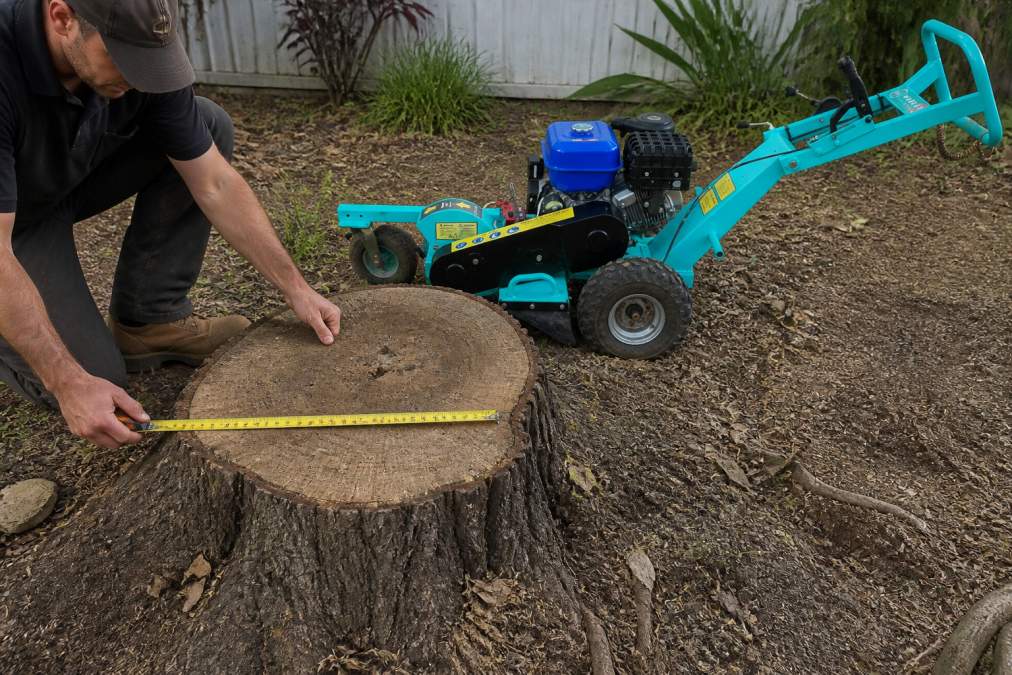
Consider the stump's height as well. If it's already been cut short (flush with the ground), you're working with less material to grind. If it's still tall, you may need to cut it lower first before grinding begins. Some hire equipment providers offer this service, but others expect the stump to be pre-cut.
Check whether the stump is still green (freshly cut) or aged. A fresh stump with living wood grinds differently from a dry, dead stump that's been sitting for months. Aged wood is often harder and more brittle, which affects grinding speed. If you're uncertain, assume it's aged, that's usually the more challenging scenario.
Key Factors for Choosing the Right Stump Grinder
Beyond horsepower and stump diameter, several practical factors influence which stump grinder size suits your project.
Stump diameter and wood type
Stump diameter is your primary decision driver. Measure honestly and don't round down, it's better to hire slightly more machine than you need than to discover mid-job that your equipment can't handle the work.
Wood type matters equally. Hardwoods like eucalyptus, oak, and ironbark are dense and wear grinding wheels faster (research on wood density and tool wear). Softwoods like pine grind more easily and quickly. If you're grinding hardwood stumps, consider hiring a machine with slightly more horsepower than a stump diameter alone would suggest. The extra power compensates for the wood's density.
Frequency of use and project scope
If you're removing one or two stumps as a one-off DIY project, hire the smallest machine that handles your stump diameter comfortably. The cost difference between a 10HP and 15HP machine may be modest, but there's no point paying extra for power you won't use.
If you're a landscaper or contractor grinding multiple stumps regularly, a 15HP machine becomes more economical. It finishes jobs faster, reduces labour time, and justifies the hire cost across multiple projects. For very frequent use or large commercial operations, owning equipment rather than hiring makes financial sense, but that's beyond the scope of DIY projects.
Access and terrain considerations
Physical access determines whether a particular machine size is even viable. A large, heavy stump grinder may be more powerful, but if it can't fit through your side gate or navigate a narrow garden path, it's useless.
Measure your access points: the width of gates, pathways, and any tight corners the equipment needs to navigate. Compare these dimensions to the machine's width and length. Some stump grinders are compact specifically for residential use; others are wider and suited to open commercial sites.
Terrain also matters. Soft, muddy ground may not support a heavy machine without sinking or getting stuck. Hard, level ground allows heavier equipment to operate safely. If your site is sloped or uneven, a lighter, more manoeuvrable machine may work better.
How to Remove Tree Stumps with the Right Equipment
Once you've selected the right stump grinder size, the removal process is straightforward. Most DIY operators find that a 15HP stump grinder handles typical residential stumps efficiently. The machine does the hard work; your role is to position it safely and follow the operating guidelines.
Start by clearing the area around the stump. Remove rocks, debris, and any underground obstacles that might damage the grinding wheel. Cut the stump as close to ground level as possible using a chainsaw, this reduces the amount of material to grind and speeds up the process.
Position the grinder so the wheel approaches the stump at a slight angle. Begin grinding the outer edges of the stump, working gradually towards the centre. The wheel will pull material downward and outward; this is normal. Move the machine slowly and deliberately, rushing causes the wheel to bog down and wastes time.
Grind in passes, lifting the wheel between each pass to clear debris. Most small to medium stumps are reduced to sawdust within 30 to 60 minutes of steady grinding. Larger or harder stumps take longer. Once the stump is ground down, you're left with a pile of wood chips and sawdust that can be removed or left as mulch.
Stump Grinder Hire Options for Your Project
Hiring a stump grinder is more cost-effective than purchasing for most homeowners and one-off projects. Equipment hire providers in the Mackay area offer flexible terms: same-day hire, 24-hour hire, and multi-day packages to suit different project timelines.
A 15HP stump grinder hire typically includes the machine and a trailer for transport. This combination is practical for residential projects where you need to move the equipment from the hire depot to your property. Trailers make transport straightforward, most standard vehicles can tow a light trailer safely.
When you contact a hire provider, have your stump measurements ready. Describe the stump diameter, wood type, and access constraints. A reputable provider will recommend the right machine size and confirm it's available for your preferred hire dates. Ask about operating instructions and safety requirements, most providers include basic guidance, though some offer more comprehensive support.
Stump Grinder Hire Mackay provides well-maintained equipment with flexible booking options. The equipment comes ready to operate, with clear instructions and support if questions arise during your hire period. You can view stump grinder hire options to check availability for your project timeline.
Safety Considerations When Operating a Stump Grinder
Stump grinders are powerful machines that demand respect and attention. Operating one safely requires proper protective equipment, awareness of hazards, and disciplined technique.
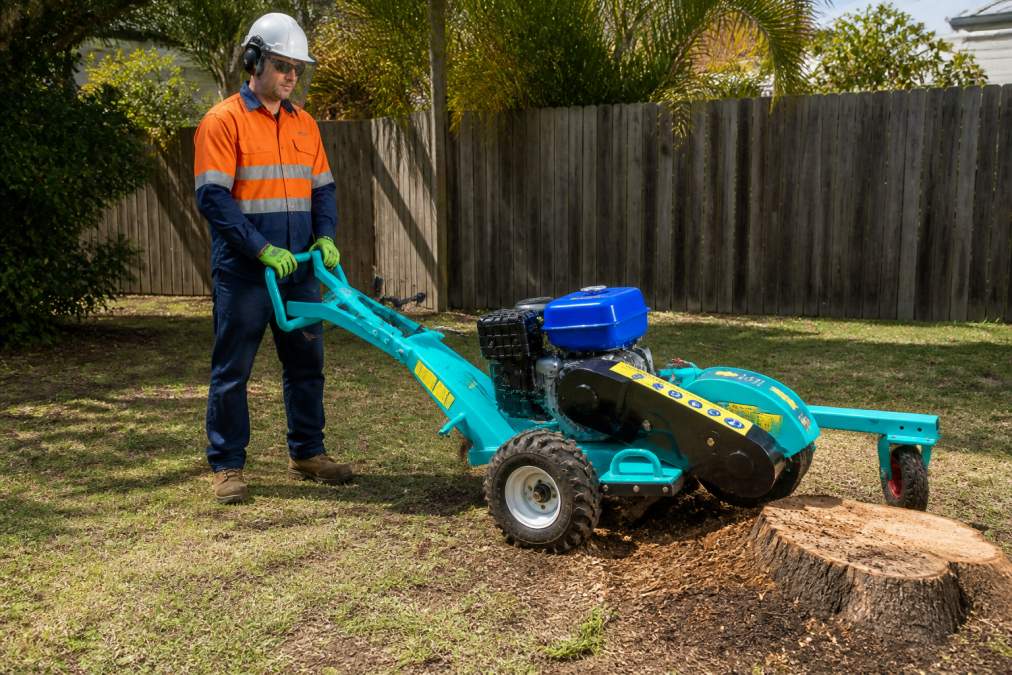
Always wear a hard hat, face shield, and safety glasses. Grinding produces flying debris, wood chips, rocks, and sometimes metal fragments, that can cause serious eye and head injuries. Heavy-duty work gloves protect your hands from sharp edges and rotating parts. Steel-capped boots protect your feet if the machine moves unexpectedly.
Never wear loose clothing, long hair, or dangling jewellery. These can catch on rotating parts and cause severe injuries. Tie back long hair, wear fitted clothing, and remove rings and bracelets before operating.
Keep bystanders, children, and pets well away from the work area. Debris can travel several metres from the machine. Establish a clear safety zone and ensure no one enters it while grinding is underway. Many serious injuries occur when someone steps into the path of ejected material.
Check the area for underground utilities before you start. Call Dial Before You Dig (1100) to identify the location of electricity, gas, water, and telecommunications lines. Hitting a live electrical line or gas pipe can be fatal. Even water and telecommunications lines can cause problems if damaged.
Inspect the stump grinder before use. Check that the wheel spins freely, all guards are in place, and the engine starts smoothly. Report any damage or malfunction to the hire provider immediately, do not attempt to operate faulty equipment.
Never reach towards the grinding wheel whilst it's spinning. Never try to clear jammed material by hand. If the wheel jams, stop the engine, wait for the wheel to stop completely, and only then investigate. Many operators have lost fingers or hands by ignoring this rule.
Operate the machine on level ground when possible. Avoid steep slopes where the machine might tip. If you must work on uneven terrain, operate slowly and carefully, keeping your weight centred and your movements deliberate.
Common Mistakes to Avoid When Choosing Equipment
The most frequent error is underestimating stump diameter. Homeowners often measure the stump carelessly or assume it's smaller than it actually is, then hire a machine that struggles with the job. Measure twice, use millimetres for precision, and when in doubt, hire the slightly larger machine.
Another common mistake is ignoring wood type. A 200mm hardwood stump requires more power than a 200mm softwood stump. If you know your stump is hardwood (eucalyptus, oak, ironbark), factor that into your horsepower choice. Ask the hire provider for advice if you're uncertain.
Don't hire based solely on lowest price. A cheaper machine that's undersized or poorly maintained wastes time and creates frustration. A reputable hire provider maintains equipment reliably and offers machines that match your actual needs. The modest difference in hire cost is worth the reliability and efficiency.
Avoid hiring equipment that's too large for your access. A powerful 20HP machine is useless if it won't fit through your gate. Measure your access constraints before booking, width, length, and any tight corners the equipment must navigate.
Finally, don't skip safety preparation. Operating a stump grinder without proper protective equipment or without clearing the area of hazards puts you and others at risk. Invest in safety gear, follow the operating instructions provided by the hire company, and take the work seriously.
Choosing the right stump grinder size is straightforward once you understand the relationship between horsepower, stump diameter, and wood type. Measure your stump accurately, consider your access and terrain, and match the machine to the job. For most residential projects in Mackay, a 15HP stump grinder hire delivers the power and manoeuvrability needed without unnecessary cost or complexity. Start by checking Stump Grinder Hire Mackay to confirm availability and get your project underway.
Frequently Asked Questions
What size stump grinder do I need for a residential backyard?
For most residential stumps under 300 mm diameter, a compact stump grinder with 10-15 HP will handle the work efficiently. Larger stumps or hardwood species may require additional horsepower. Measure your stump's diameter first, then match it to the grinder's specifications. If you're uncertain, hiring equipment allows you to start with a smaller machine and upgrade if needed.
How do I know if a stump grinder has enough horsepower for hardwood stumps?
Hardwood stumps like oak or eucalyptus require more grinding power than softwoods. A 15 HP stump grinder with carbide cutting teeth is suitable for most hardwood stumps up to 300-400 mm diameter. Check the equipment specifications and discuss your stump type with the hire provider before booking to ensure you get the right horsepower for efficient grinding.
What's the difference between hiring a stump grinder and removing stumps another way?
Stump grinding is faster and cleaner than digging out stumps by hand or using chemical removal. A hired stump grinder lets you tackle the job yourself over a weekend without labour costs. The equipment leaves the area ready for replanting or landscaping. Hiring also avoids the expense and effort of manual removal or hiring a contractor to operate the machinery.
Can I remove multiple stumps with a single stump grinder hire?
Yes. Most hire periods allow you to grind multiple stumps within the hire window. Smaller stumps take 15-30 minutes each, while larger ones may take an hour or more. Plan your project timeline and confirm the hire duration covers all your stumps. Same-day or multi-day hire options give you flexibility to complete the full job without rushing.
This article was written using GrandRanker