

Table of Contents
- Diagnose the Problem: Signs and Causes of Poor Backyard Drainage
- DIY Trenching for Drainage: Digging a French Drain
- Improving Soil Drainage in Clay: What Actually Works
- When to Bring in a Mini Loader: Mini Loader Hire for Landscaping
- Common Mistakes to Avoid When Fixing Drainage
- Prevention: Maintaining Good Drainage Long-Term
- Conclusion: Your Action Plan for a Drier Backyard
- Frequently Asked Questions
Last Updated: September 8, 2026
A soggy lawn, pooling water after rain, or damp patches creeping towards your house foundation are all signs that water is going where it shouldn't. Poor backyard drainage is one of the most common problems for Australian homeowners, and it usually comes down to a few fixable causes rather than a hopeless site. This guide from MarKay Outdoors walks you through how to fix backyard drainage issues yourself, from diagnosing the culprit to trenching in a French drain, and knowing when a mini loader hire for landscaping will save you a weekend of hard labour.
The good news is that most drainage problems are fixable with the right approach and the right equipment. Whether you're dealing with heavy clay soil, a low spot that collects water, or runoff from your roof, there's a practical solution that doesn't require a full landscape redesign. Below, we'll show you exactly how to assess what's happening in your yard and work through the fixes in order of effort, starting with the simplest and most effective.
Diagnose the Problem: Signs and Causes of Poor Backyard Drainage
Before you dig a single trench, take time to watch your yard during and after rain. Poor backyard drainage usually shows itself as water pooling in low areas, soil that stays wet for days, or grass that struggles in patches. Walk the property during a downpour to see where water collects and which direction it flows.
The root causes are often straightforward. Heavy clay soil absorbs water slowly, so rain sits on the surface. Compacted ground from foot traffic or machinery has the same effect. Downpipes that discharge water against the house or into the yard without a proper outlet can overwhelm a small area. And low spots in the lawn simply have nowhere for water to go. According to guidance on urban stormwater management from the Queensland Government, directing runoff away from buildings and allowing it to infiltrate on your own property is the first line of defence against drainage problems.
A simple test helps: dig a hole about 300 mm deep and fill it with water. If it takes more than a few hours to drain, you have a percolation problem that surface fixes won't solve.
DIY Trenching for Drainage: Digging a French Drain
A French drain is the classic fix for a yard that holds water in one area. The concept is simple: a trench filled with gravel and a perforated pipe that captures surface water and carries it to a better location, such as a stormwater pit or a lower part of the yard.
DIY trenching for drainage starts with planning your line. The trench needs a consistent fall of about 1 in 50, meaning it drops roughly 20 mm for every metre of length. Mark the path with string and pegs, then dig a trench about 300 mm wide and deep enough to sit below the problem area. For a small backyard job, a sharp shovel and a trenching spade will do, but the effort adds up quickly once you factor in removing the spoil and shifting gravel.
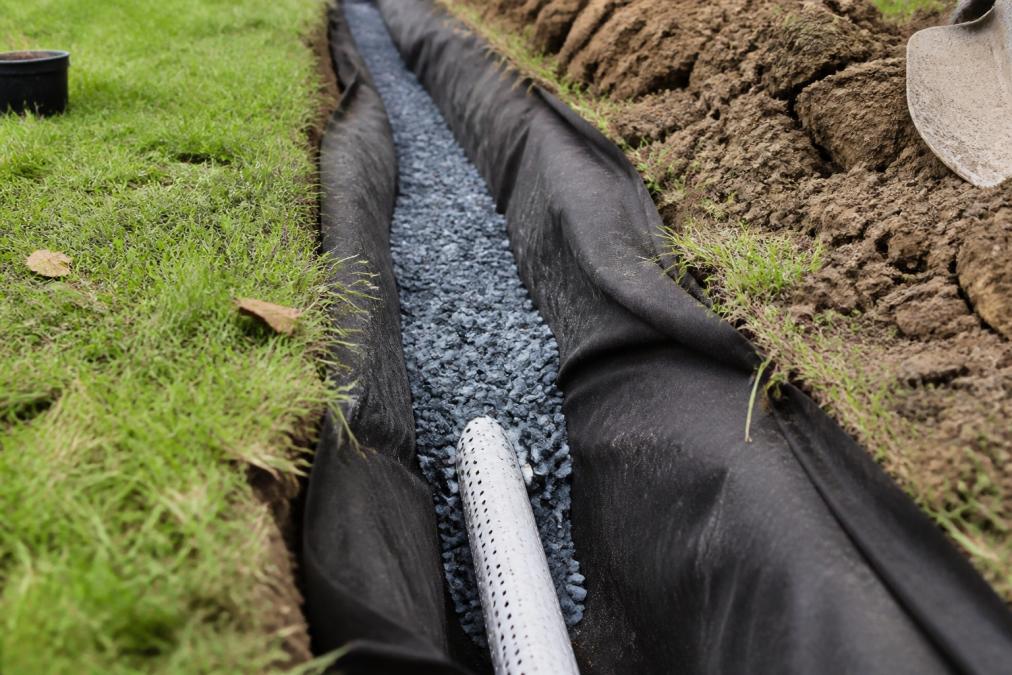
Line the trench with geotextile fabric, lay the perforated pipe with the holes facing down, and cover it with washed gravel. Fold the fabric over the top before backfilling with soil. The key mistake here is skimping on the gravel or using the wrong pipe, which leads to a drain that clogs within a season.
For trenches longer than about ten metres, or if your soil is hard and root-bound, hand digging becomes a genuine slog. This is where a compact machine changes the job entirely.
Improving Soil Drainage in Clay: What Actually Works
Clay soil is the most frustrating drainage problem because it defies simple fixes. Adding sand to clay can actually make things worse, creating a concrete-like mix. The practical options for improving soil drainage in clay are organic matter, gypsum, and changing the grade of the land.
Working compost and well-rotted manure into the top 150 to 200 mm of soil improves structure over time, helping clay particles clump together and let water through. Gypsum can help in sodic clay soils, but it is not a universal cure. The most reliable approach for a chronically wet clay yard is to install subsurface drainage that moves water away before it saturates the soil.
Breaking up compacted clay before you add amendments is critical, and this is where a rotary hoe hire Mackay earns its keep. A rotary hoe loosens the ground far deeper and faster than hand digging, giving your organic matter a chance to actually work. For larger areas, tilling the soil and reshaping the surface so water runs away from the house is the most effective long-term strategy.

When to Bring in a Mini Loader: Mini Loader Hire for Landscaping
There comes a point in every serious drainage project where hand tools stop being practical. If you're digging more than a few metres of trench, moving significant spoil, or reshaping a whole section of yard, mini loader hire for landscaping is the smarter call. A mini loader digs faster, moves spoil in one pass, and saves your back for the finishing work.
For tight backyard access, the Kanga KID KK216 mini loader is only 800 mm wide, making it a strong option for narrow side gates and confined spaces where larger machinery cannot fit. If you have more open access and need greater capability, the Kanga PW628 handles heavier trenching and earthmoving work. Both are available for dry hire from MarKay Outdoors, where you operate the machine yourself with straightforward online booking.


A common question is whether a mini loader is overkill for a residential block. For a single short French drain, it probably is. But if you're also removing a stump that sits in the way of your drainage line, clearing an old garden bed, or moving a few cubic metres of soil, the machine pays for itself in time saved. Many Mackay homeowners find that a weekend hire covers trenching, spoil removal, and site clean-up that would otherwise take several weekends by hand.
Common Mistakes to Avoid When Fixing Drainage
Most failed drainage jobs share the same errors, and avoiding them saves you from digging the same trench twice.
The first mistake is discharging water where it becomes someone else's problem. Water diverted onto a neighbour's property or across a shared boundary creates conflict and can breach local council rules. Your drain needs a legal and sensible outlet, such as a council-approved stormwater connection or a soakage pit on your own land.
The second is using the wrong materials. Agricultural pipe without a sock, gravel that is too fine, or missing geotextile fabric all lead to silt building up inside the pipe. Within a year or two, the drain stops working and you are back to square one. Quality materials cost more upfront but make the job a once-only exercise.
The third mistake is poor fall. A drain that does not have a consistent gradient will hold water in the low sections and eventually silt up. Check your fall with a string line and spirit level before you backfill, because correcting it after the fact means digging everything out again.
Prevention: Maintaining Good Drainage Long-Term
A well-built drain should last for decades, but the system around it needs occasional attention. Clear leaves and debris from surface drains and pit covers regularly, especially before the wet season. Check that downpipe diverters and stormwater connections are not blocked, and look for areas where soil has settled and created new low spots.
Keeping your lawn healthy also supports drainage. Aerating compacted turf once a year with a core aerator hire Mackay lets water reach the soil instead of running off the surface. Aeration is particularly valuable on clay soils and lawns that see heavy foot traffic, and it is a job you can complete in an afternoon with the right equipment.
Watch your yard after heavy rain and note any new trouble spots. Catching a drainage problem early, while it is still a damp patch rather than a bog, makes the fix simpler and cheaper.
Conclusion: Your Action Plan for a Drier Backyard
Fix your backyard drainage issues by working through them in order: diagnose where the water comes from and where it needs to go, start with surface fixes and soil improvement, then move to trenching and subsurface drainage for persistent problems. Match the scale of your fix to the scale of the problem, and use the right equipment so the job does not become a marathon.
For Mackay homeowners and landscapers tackling a drainage project, MarKay Outdoors offers the compact equipment you need for dry hire, including Kanga mini loaders for trenching and earthmoving, rotary hoes for soil preparation, and lawn care equipment for ongoing maintenance. With easy online booking, local pickup, and flexible same-day, 24-hour, and multi-day hire options, getting the right machine for your weekend project is straightforward.
Frequently Asked Questions
What is the cheapest way to fix backyard drainage?
The most budget-friendly fix often starts with simple surface solutions: re-routing downpipes, creating a swale to direct water away, or manually aerating the soil. If water pooling is persistent, a French drain is the standard DIY fix. You can dig the trench yourself, which keeps costs down, and hire equipment like a Kanga mini loader for the digging if the run is long or the ground is hard. This approach avoids the expense of calling in a contractor.
How do I know if my backyard has poor drainage?
Look for puddles that remain 24 hours after rain, water pooling against the house slab or fence lines, and patches of yellowing or dead grass in low spots. Soil that stays soggy for days, a musty smell, and an increase in moss or mould are also strong indicators. Dig a small test hole: if it holds water after a heavy downpour for more than a day, you likely have a drainage issue that needs addressing.
Can I use a mini loader to regrade my yard for better drainage?
Yes, a mini loader is a practical tool for regrading. A Kanga mini loader hire for landscaping allows you to move and spread fill to create a gentle slope away from your house. The Kanga KID is only 800mm wide, making it ideal for tight backyards where larger machinery can't fit. For larger areas, the PW628 offers more capability. Both are available for dry hire, so you can operate them yourself to reshape the yard.
Do I need council approval for major drainage works?
In Queensland, you generally don't need approval for minor works like a small French drain on your property. However, if your project involves redirecting natural water flow onto a neighbour's property, connecting to council stormwater infrastructure, or significant earthworks, you may require a development approval. It is best to check with the Mackay Regional Council before starting major excavation to avoid fines and ensure your project complies with local regulations.
A drier, healthier backyard starts with the right diagnosis and the right tools. Whether you need a mini loader to cut a trench or an aerator to keep your lawn draining well, MarKay Outdoors has the equipment ready to go. VIEW EQUIPMENT & HIRE PRICES and get your project moving this weekend.