

Table of Contents
- What Professional Lawn Aeration Actually Does
- Core Aerator Hire vs Professional Aeration Services
- How to Use a Core Aerator When Hiring Equipment
- Best Time of Year to Aerate Lawns
- Cost Comparison: Hiring vs Professional Services
- When Professional Aeration Makes Sense
- Getting Started With DIY Aeration
Last Updated: August 26, 2026
What Professional Lawn Aeration Actually Does
Professional lawn aeration is the process of removing small plugs of soil from your lawn to relieve compaction and create pathways for air, water, and nutrients to reach the root zone. Over time, foot traffic, mowing, and weather compress the soil beneath your grass, making it harder for these essentials to penetrate. A core aerator physically removes these plugs rather than simply punching holes, which is why it's the preferred method for serious lawn renovation.

The difference between core aeration and spiking matters more than most people realise. Spiking creates solid holes that can actually compress soil further around the edges. Core aeration removes material entirely, opening genuine channels through compacted layers. If your lawn is suffering from heavy traffic, poor drainage, or thin growth despite regular watering, compaction is likely the culprit.
Many homeowners wonder whether they need professional help or can tackle aeration themselves. The honest answer depends on your lawn size, soil condition, and whether you're willing to hire the equipment and learn the technique. Both approaches work, the real question is which makes sense for your situation and budget.
Core Aerator Hire vs Professional Aeration Services
The choice between hiring a core aerator and paying someone to aerate your lawn comes down to three factors: cost, control, and effort.
Hiring equipment yourself means you operate the machine, which gives you complete control over timing, coverage, and how thoroughly the job gets done. You can aerate exactly when conditions are right for your lawn rather than fitting into a contractor's schedule. The trade-off is physical effort, core aerators are heavy machines, and operating one for several hours requires stamina. You'll also need to transport the equipment, which is why most hire packages include a trailer.
Professional aeration services handle everything for you. A contractor arrives with their own equipment, completes the work, and leaves. You avoid the physical labour and don't need to understand how the machine works. The downside is cost, professional services typically charge more than equipment hire because they're providing labour and expertise. You also have less say in timing and coverage patterns.
For most homeowners in Mackay, the decision hinges on lawn size and physical capability. A small residential block might take 2-3 hours with a hired aerator. A larger property or one with heavy compaction could take a full day. If you're comfortable with physical work and want to save money, hiring makes sense. If you'd rather avoid the effort or have mobility concerns, professional services are worth the investment.
There's also a middle ground: many landscapers and contractors hire equipment themselves rather than owning it, which keeps their costs down whilst still offering professional results. If you're considering hiring someone, ask whether they own their equipment or hire it, either way works, but it affects their pricing.
How to Use a Core Aerator When Hiring Equipment
Operating a core aerator is straightforward once you understand the basics, but preparation matters more than the actual operation.
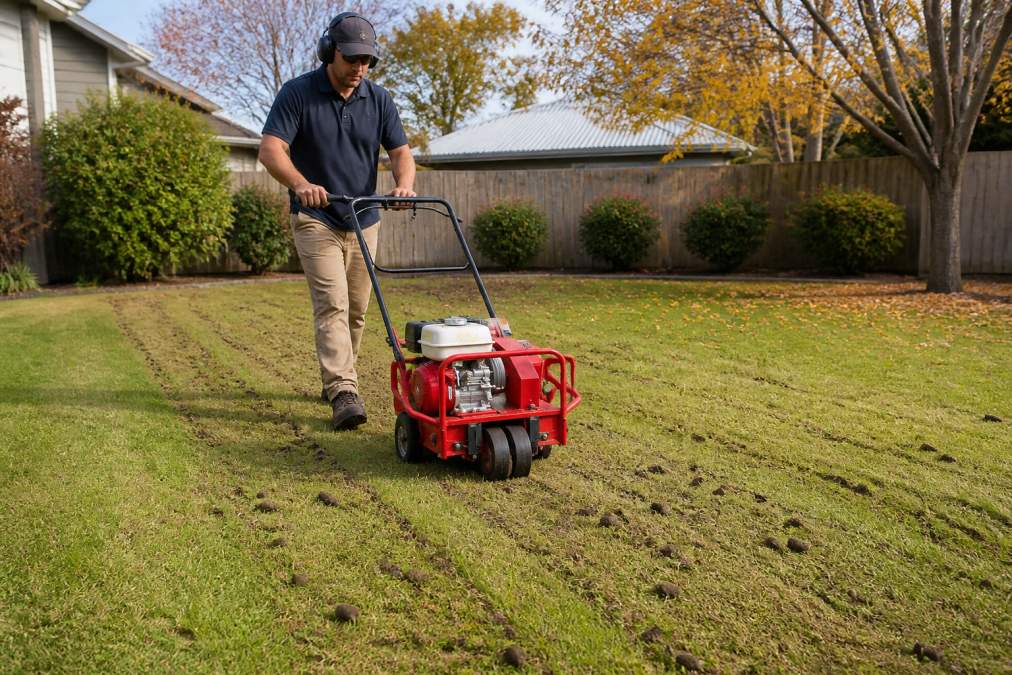
Before you pick up the aerator, walk your lawn and identify anything buried beneath the surface that could be damaged. Look for irrigation lines, sprinkler heads, garden lighting cables, invisible dog fences, and any shallow services. If you're unsure what's underground, contact your local utility locating service or ask your neighbours, it's worth the precaution to avoid expensive damage.
Soil moisture is critical. The ground should be moist enough for the coring tines to penetrate cleanly, but not waterlogged (dpi.nsw.gov.au). If your lawn is bone-dry, water it a day or two before you plan to aerate. If it's been raining heavily, wait a few days for it to dry out slightly. Wet soil clogs the machine and can damage its structure.
When you operate the aerator, move at a steady pace and make overlapping passes to ensure even coverage. Most lawns benefit from two passes in perpendicular directions, first north-south, then east-west. This creates a grid pattern that relieves compaction more effectively than single-pass coverage. The machine does the hard work; your job is steering and maintaining consistent speed.
The soil cores left on your lawn aren't rubbish, they're part of the renovation process. Many people leave them to break down naturally over a few weeks, which returns organic matter to the soil. Others rake them up immediately, especially if they're planning to top-dress. Either approach works depending on your preference and timeline.
After aeration, water your lawn well and let it recover for a week or two before heavy use. This gives the grass time to fill in the holes and benefit from improved soil conditions. If you're planning to top-dress, do it within a few days of aeration whilst the holes are still open, the aeration creates perfect channels for top-dressing material to work into the soil profile.
Best Time of Year to Aerate Lawns
Timing your aeration with your lawn's growing season makes a significant difference in results.
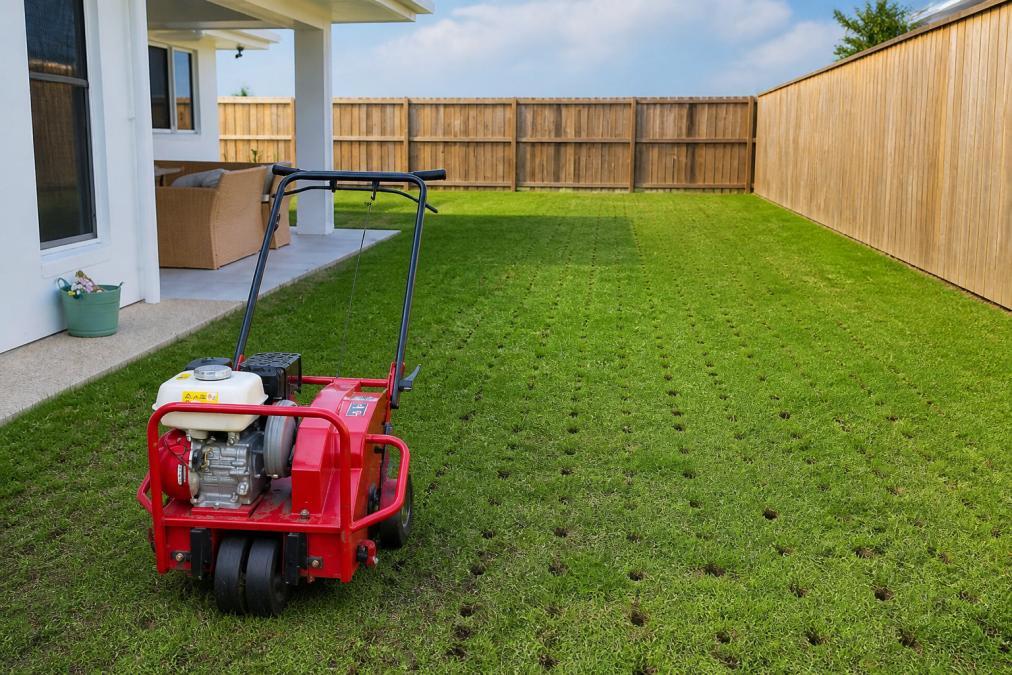
In Mackay, spring and autumn are ideal for aeration. Spring aeration (September to November) allows your grass to recover and fill in holes during the warm growing season (dpi.nsw.gov.au). Autumn aeration (March to May) prepares your lawn for cooler months and gives it time to establish before winter stress. Both windows offer moderate temperatures and typically adequate soil moisture.
Avoid aerating during summer heat or winter dormancy. Hot, dry conditions stress grass further after aeration, and the plant won't have energy to recover quickly. Winter dormancy means your grass isn't actively growing, so it can't fill in the holes or benefit from improved soil conditions. Summer aeration can work if you water heavily afterward, but spring and autumn are safer choices for most lawns.
The one exception is if your lawn has severe compaction or poor drainage causing visible problems, in that case, early spring aeration gives you the longest growing season to see improvement before the next winter. If you're addressing compaction for the first time, don't wait for the "perfect" season; getting the job done matters more than hitting an ideal window.
Many people combine aeration with other lawn work. A typical renovation sequence runs dethatch, aerate, top-dress, fertilise, and water. This approach tackles multiple issues at once and gives you the best chance of significant improvement. If you're only aerating without other work, any growing season window works, the grass will still benefit from relieved compaction and improved nutrient access.
Cost Comparison: Hiring vs Professional Services
The financial case for DIY aeration hinges on lawn size and how often you need the service.
For a single aeration job on a residential property, hiring equipment costs considerably less than professional services. Professional aeration services typically charge based on lawn size, depending on complexity and coverage area.
If you're aerating a small block once, hiring is the obvious choice financially. You pay for the equipment use, fuel, and your own time. If you're managing a larger property or plan to aerate every few years, the economics shift. Some contractors who aerate regularly find that hiring equipment multiple times per year costs more than owning their own machine, so they invest in equipment. For most homeowners, however, occasional hiring makes more sense than ownership.
There's also the option of combining aeration with other lawn work. If you're doing a full renovation, dethatch, aerate, and top-dress, hiring a complete lawn care package can be more economical than paying for each service separately. Many equipment hire businesses offer bundled packages that include the major renovation tools together on one trailer, which saves transport effort and can reduce overall costs.

Labour is the hidden cost in professional services. You're paying for someone's expertise, time, and the ability to complete the work without your involvement. If your time is valuable or you simply prefer not to do physical labour, that cost is worth it. If you're happy to spend a Saturday operating a machine, hiring equipment is the budget option.
One practical consideration: if you've never used a core aerator before, hiring gives you a low-risk way to try the technique before committing to professional services or larger projects. You learn whether DIY aeration suits your situation, and you get immediate results to judge.
When Professional Aeration Makes Sense
Professional aeration becomes the better choice in specific situations where DIY hiring doesn't fit well.
Large properties are the clearest case. Aerating an acre or more with a hired machine takes many hours and requires sustained physical effort. A contractor can complete the same work in a fraction of the time with commercial-grade equipment. For acreage owners, professional services often save enough time to justify the cost.
Mobility or health limitations make professional services essential. Operating a core aerator requires physical strength and balance, and the repetitive motion can aggravate existing conditions. If you have back problems, joint issues, or limited mobility, paying someone to do the work is the sensible choice. Your health matters more than the cost difference.
If your lawn has complex issues, severe compaction, poor drainage, uneven settling, or heavy thatch, a professional can assess the situation and recommend the best approach. Some lawns benefit from additional steps beyond basic aeration, and an experienced contractor can spot these needs. You're paying for their judgment alongside their labour.
Time constraints are valid too. If you're juggling work, family, and other commitments, hiring someone eliminates the need to block out a full day or weekend. The convenience has real value, even if the financial case is less compelling.
Professional services also make sense if you want ongoing lawn management. Many contractors offer seasonal aeration packages or regular maintenance plans. If you're committed to long-term lawn improvement, building a relationship with a local professional can be simpler than hiring equipment multiple times per year.
Getting Started With DIY Aeration
If you've decided that hiring equipment suits your situation, the process is straightforward.
Start by assessing your lawn honestly. Walk it thoroughly and note areas of poor growth, drainage problems, or visible compaction. This tells you whether aeration alone will help or whether you need additional work like dethatching or top-dressing. A complete renovation package often delivers better results than aeration by itself, though aeration alone still improves most compacted lawns.
Next, check your soil moisture. If your lawn is dry, water it a day or two before your hire date. If it's been raining heavily, wait for the soil to dry slightly. Aim for soil that's moist but not waterlogged, this is the sweet spot for effective aeration.
When you book your equipment, be clear about your lawn size and what you're trying to achieve. Most hire businesses can advise whether you need a standard core aerator or a complete lawn care package. If you're unsure, ask, they've done this many times and can steer you toward the right equipment.
On hire day, inspect the equipment before you leave. Check that all controls work, the fuel tank is full, and nothing is visibly damaged. Take photos of the equipment's condition so there's no dispute when you return it. Ask the hire business for a quick demonstration if you've never operated the machine before, most are happy to show you the basics.
Plan your aeration pattern before you start. You'll want to make overlapping passes in two directions to ensure even coverage. Mark out your route mentally or with flags if you have a large property. This prevents missed spots and makes the work more efficient.
After you've finished, water your lawn well and avoid heavy foot traffic for a week or two. Let the grass recover and settle into the improved soil conditions. Many people see noticeable improvement within a few weeks, especially if they combine aeration with top-dressing and regular watering.
If you're planning a full lawn renovation, consider hiring a Lawn Care Trailer Hire Mackay | Aerator + Dethatcher + Rakes Included package that includes dethatcher and aerator on one trailer for $250.00. The equipment comes ready to tow, with rakes and garden bags included, which simplifies the entire process and saves transport effort.
For core aeration alone, Lawn Aerator & Trailer Hire Mackay | Core Aerator Hire provides the equipment with transport included for $190.00, so you don't need to arrange separate machinery or lifting.
Is professional lawn aeration worth it? The answer depends entirely on your lawn's condition, your physical capability, and how much you value your time. For most homeowners in Mackay with moderate-sized properties and reasonable health, hiring equipment and doing the work yourself delivers excellent results at a fraction of professional costs. For larger properties, ongoing maintenance, or when you'd simply prefer not to do the labour, professional services justify their cost. Either way, addressing soil compaction through aeration improves lawn health more reliably than almost any other single intervention. The real question isn't whether aeration is worth it, it's which approach fits your situation best.
=== FAQ ANSWERS (audit these too, same rules) ===
[1] Q: How often should you aerate your lawn? A: Most residential lawns benefit from aeration once every 1-2 years, depending on soil compaction and foot traffic. High-traffic areas, clay-heavy soils, or lawns with poor drainage may need annual aeration. If your lawn drains well and sees light use, aeration every 2-3 years may be sufficient. The best approach is to assess your lawn's condition each year and aerate when you notice compaction or drainage issues.
[2] Q: What are the signs your lawn needs aeration? A: Watch for pooling water after rain, thin or patchy grass, difficulty pushing a screwdriver into the soil, or areas where grass struggles despite adequate watering and fertiliser. Compacted soil restricts root development and water penetration. If your lawn has high foot traffic or is established in clay-based soil, aeration becomes more important. Core aeration directly addresses soil compaction by removing small plugs of soil.
[3] Q: Can you aerate your lawn yourself with hired equipment? A: Yes. Hiring a core aerator is a practical DIY option for most residential properties. Core aerators are designed for owner operation and don't require specialist training. The key is understanding what lies beneath your lawn before you start, check for irrigation lines, cables, and buried services. Soil moisture matters too; aerate when the ground has adequate moisture so the tines penetrate effectively. Many DIY customers successfully hire equipment and complete aeration in a single day.
[4] Q: What is the difference between core aeration and spike aeration? A: Core aeration removes small plugs of soil, creating pathways for air, water, and nutrients to reach the root zone (peer-reviewed research). Spike aeration simply punches holes into the ground without removing soil. Core aeration is more effective at relieving soil compaction because it actually opens the compacted soil structure. For lawn renovations and compaction relief, core aeration is the preferred method and is what professional equipment hire typically provides.
Frequently Asked Questions
How often should you aerate your lawn?
Most residential lawns benefit from aeration once every 1-2 years, depending on soil compaction and foot traffic. High-traffic areas, clay-heavy soils, or lawns with poor drainage may need annual aeration. If your lawn drains well and sees light use, aeration every 2-3 years may be sufficient. The best approach is to assess your lawn's condition each year and aerate when you notice compaction or drainage issues.
What are the signs your lawn needs aeration?
Watch for pooling water after rain, thin or patchy grass, difficulty pushing a screwdriver into the soil, or areas where grass struggles despite adequate watering and fertiliser. Compacted soil restricts root development and water penetration. If your lawn has high foot traffic or is established in clay-based soil, aeration becomes more important. Core aeration directly addresses soil compaction by removing small plugs of soil.
Can you aerate your lawn yourself with hired equipment?
Yes. Hiring a core aerator is a practical DIY option for most residential properties. Core aerators are designed for owner operation and don't require specialist training. The key is understanding what lies beneath your lawn before you start, check for irrigation lines, cables, and buried services. Soil moisture matters too; aerate when the ground has adequate moisture so the tines penetrate effectively. Many DIY customers successfully hire equipment and complete aeration in a single day.
What is the difference between core aeration and spike aeration?
Core aeration removes small plugs of soil, creating pathways for air, water, and nutrients to reach the root zone. Spike aeration simply punches holes into the ground without removing soil. Core aeration is more effective at relieving soil compaction because it actually opens the compacted soil structure. For lawn renovations and compaction relief, core aeration is the preferred method and is what professional equipment hire typically provides.
This article was written using GrandRanker