

Table of Contents
- Why timing matters: top-dressing before the rainy season
- Prepare your lawn: dethatch before top-dressing
- Lawn aeration benefits and when to aerate
- How to use a lawn top dresser for fast, even coverage
- Choosing the right top-dressing material
- Protect your investment: watering and settling after application
- Conclusion
Getting your lawn ready before the rainy season requires timing and the right approach. Top-dressing a lawn quickly before the rainy season in Queensland means preparing your turf to handle increased moisture and establish stronger growth when conditions favour it most. This guide explains why timing matters, what preparation steps save you time, and how to top-dress a lawn quickly without cutting corners.
Why timing matters: top-dressing before the rainy season
The window before heavy rain arrives is your best opportunity to improve lawn health. Rain activates nutrients, settles materials into the soil, and supports root development, but only if your lawn is properly prepared.
Top-dressing before the rainy season works because the moisture that follows helps incorporate the material into your soil profile. Without rain, top dressing sits on the surface longer and can wash away or dry out. With it, the process accelerates naturally.
Mackay's subtropical climate means your rainy season typically brings consistent moisture from November through March (bom.gov.au). Applying top dressing in the weeks before this period, roughly September through October, gives you ideal conditions. The soil is warm enough for root activity, but rain is close enough to activate the nutrients and settle the material.
The timing also matters for your lawn's recovery. If you dethatch, aerate, and top-dress too early in spring, you're asking your grass to recover during cooler months when growth slows. Too late, and the rainy season passes before your lawn can benefit. Mid-to-late spring hits the sweet spot for most Mackay properties.
Prepare your lawn: dethatch before top-dressing
Dethatching before top-dressing is one of the most overlooked steps, and one that changes everything.
Thatch is the layer of dead grass, stems, and organic material that builds up between the green grass and soil. A thin layer is normal. A thick layer blocks water, air, and nutrients from reaching the root zone (peer-reviewed research). If you top-dress over heavy thatch, the new material sits on top of the problem rather than improving it.
Removing thatch opens up the lawn surface. Water penetrates better. Air moves through the soil. Nutrients reach the roots. When you top-dress after dethatching, the material works into the exposed soil rather than getting trapped on the surface.
The dethatcher, also called a lawn scarifier, mechanically pulls out this buildup. It's hard work by hand; a machine does it in hours. After dethatching, you'll see loose material covering the lawn. Rake it up and dispose of it. Yes, it looks messy. That mess is what was suffocating your grass.
Timing dethatching is important. Do it when the soil has enough moisture to allow the tines to penetrate without excessive effort, but not so wet that you damage soil structure. A few days after rain is ideal. If conditions are very dry, water the lawn lightly the day before to help the machine work effectively.
Many Mackay homeowners hire a Dethatcher Hire Mackay for same-day or 24-hour use. Same-day hire works well if you're tackling a small residential block in a single afternoon. For larger properties or if you want to spread the work across a weekend, 24-hour hire gives you more flexibility.

Lawn aeration benefits and when to aerate
Aeration is the second critical step in lawn renovation. Core aeration removes small plugs of soil from the lawn, relieving compaction and creating pathways for air, water, and nutrients to reach the root zone.
Over time, foot traffic, mowing, and general use compact the soil beneath your grass. Compacted soil is dense and airless. Roots can't penetrate deeply. Water pools on the surface instead of soaking in. Nutrients stay locked in the soil rather than becoming available to the plant.
A core aerator physically removes plugs, not just pokes holes. This is important. Solid spikes compress soil further. Core aeration relieves compaction by creating actual space within the soil structure.
The benefits of lawn aeration show up quickly. After aeration, you'll see small soil cores scattered across the lawn. Leave them. They break down naturally and return organic matter to the soil. Within weeks, roots grow deeper into the aerated spaces. The lawn becomes more resilient to drought and heat stress.
When to aerate depends on your lawn type and climate. For warm-season grasses common in Mackay, couch, buffalo, and kikuyu, aerate in late spring, just before the rainy season begins (extension.oregonstate.edu). This timing lets your lawn recover during the warm, wet months when growth is strongest.
Aerate before top-dressing. The aeration holes help top-dressing material work into the soil profile. If you aerate after top-dressing, you're disturbing material you just laid down.
Many properties benefit from combining dethatching and aeration in the same renovation window. Do dethatch first, it clears the surface, then aerate. This sequence prepares the lawn properly for top-dressing.
Hiring a core aerator makes sense if your lawn is larger than 200 square metres or if you have significant compaction. An Aerator Hire Mackay package includes the trailer, so transport is straightforward. The aerator comes with fuel and is ready to use.

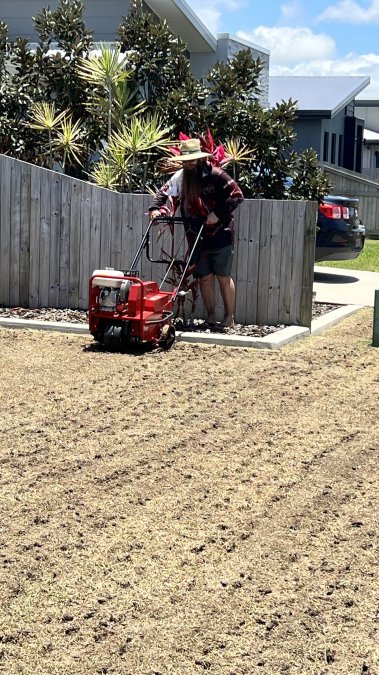
DIY customer operating a core aerator on a residential lawn, with soil plugs visible on the grass surface and a homeowner observing in the background during late morning light
How to use a lawn top dresser for fast, even coverage
A lawn top dresser spreads fine materials, sand, compost, soil mixes, and top-dressing blends, quickly and evenly across your lawn. Using one properly transforms a job that would take hours with a shovel into something you can finish in a fraction of the time.

The ECO250-S Sand Spreader & Top Dresser is purpose-built for this work. It has a 326-litre hopper, a conveyor belt that grips fine material, and dual spinning discs that distribute the material across the lawn. The spreading width adjusts from approximately 1.22 metres to 5.49 metres, so you can control coverage density.
Before you start, prepare your material. Top-dressing material should be screened and suitable for the machine. Wet, oversized, or clumpy material won't feed through the hopper properly. If you're using sand, make sure it's dry and free-flowing. If you're using a blended top-dressing mix, break up any compacted areas before loading.
Fill the hopper. The machine is self-propelled, so you're controlling direction and speed, not pushing. Start at one edge of your lawn and work in straight lines, overlapping slightly as you go. This overlap ensures even coverage with no missed strips.
The appropriate depth depends on your goals. For general top-dressing and minor levelling, 3-6 millimetres per pass is typical. For more substantial levelling work, you might make multiple passes or use a thicker application. The machine can apply up to 6.35 millimetres per pass.
Ground speed affects how much material you're laying down. Slower speed means heavier coverage. Faster speed means lighter coverage. If you're doing your first renovation, start slower and get a feel for the coverage before speeding up.
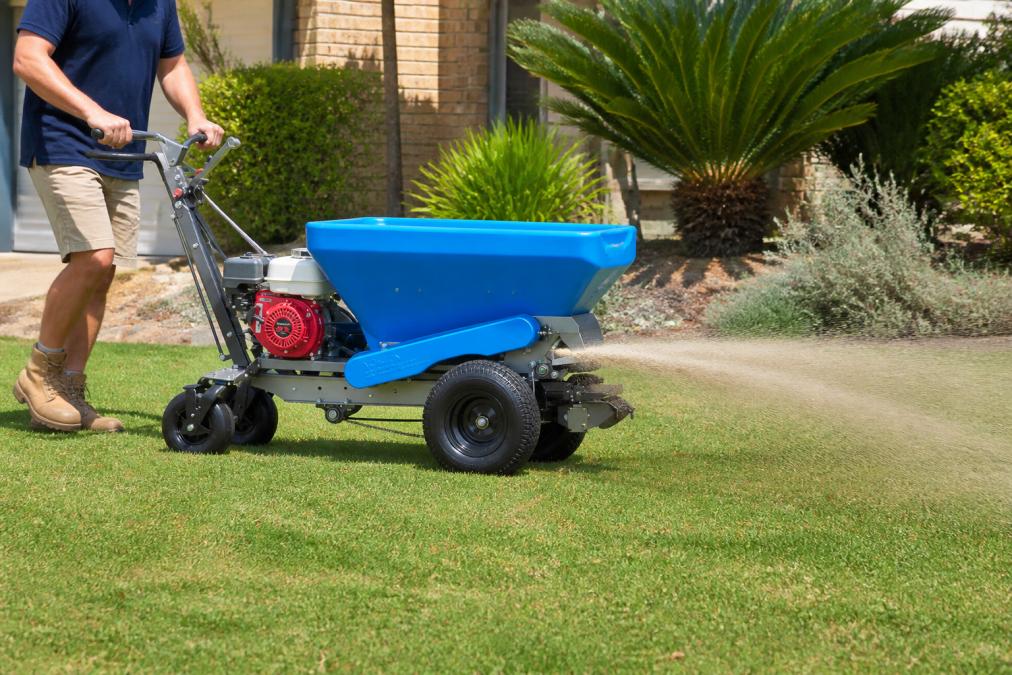
After you've covered the lawn, use a levelling rake to work the material into the surface and break up any clumps. This step ensures even distribution and helps the material settle into the aeration holes if you've aerated. A Top Dresser Hire Mackay package is available if you don't have the equipment on hand.
Choosing the right top-dressing material
Not all top-dressing materials are equal. What you choose affects how quickly your lawn recovers and how long the benefits last.
Sand is the most common choice for lawns that need levelling or drainage improvement. It's free-draining, works well with the ECO250-S, and helps break up clay-heavy soils. For pure levelling work or filling low spots, sand is your baseline.
Screened compost adds organic matter and improves soil biology. It feeds your lawn slowly as it breaks down. If your soil is depleted or you want to build soil health alongside levelling, a blend of sand and compost works better than sand alone.
Screened loam is a middle ground, it has some organic content but drains better than pure compost. It's useful if you want the benefits of organic material without the water-retention concerns of heavy compost.
For Mackay lawns heading into the rainy season, a blend that includes some compost makes sense. The organic matter improves soil structure and water retention, which helps your lawn handle both the wet season and the dry months that follow.
Apply the material at the rate recommended for your chosen blend. Most top-dressing mixes are applied at 2-3 tonnes per 100 square metres, though this varies. Your supplier will advise based on the material and your lawn's condition.
Protect your investment: watering and settling after application
Top-dressing isn't finished when the spreader stops. What you do in the days after application determines whether the material settles properly and integrates with your soil.
Watering is the critical step. Light watering, not heavy soaking, helps the material settle into place and activates any nutrients in the blend. Water immediately after top-dressing if possible. If rain is forecast within a day or two, you can wait, but don't rely on it. Light overhead watering ensures you control the settling process.
Apply enough water to dampen the top-dressing material without creating puddles or washing it away. Aim for about 10-15 millimetres of water. This is enough to move fine material into the aeration holes and settle it against the grass blades without displacing it.
Avoid heavy foot traffic on the lawn for at least 48 hours after top-dressing. The material is still settling, and walking on it compacts it unevenly. If you have children or pets, keep them off the lawn briefly.
The material will look rough and loose for a few days. This is normal. As you water and as rain falls, it settles further. Within a week, it should look much more integrated with your existing lawn. Within two weeks, it's fully settled.
If you've applied a blend that includes compost or organic material, avoid mowing for at least two weeks after application. You want the material to settle and integrate before the mower runs over it.
The timing of rainfall matters. If heavy rain arrives within 24 hours of top-dressing, the material will settle quickly but might move around more than you'd like. Light, steady rain over several days is ideal. This is why timing your renovation before the rainy season is smart, you're working with the season, not against it.
If the weather turns unexpectedly dry after top-dressing, water lightly every few days to keep the material settling gradually. Dry conditions slow integration and can leave the material sitting on the surface longer than ideal.
After settling, your lawn will look thicker and more uniform. The aeration holes will be less visible. The overall colour and texture should improve noticeably within 3-4 weeks as the grass responds to the improved soil conditions and nutrients.
Conclusion
Top-dressing a lawn quickly before the rainy season combines timing, preparation, and the right equipment. Dethatch first to open the surface. Aerate to relieve compaction. Spread top-dressing material evenly with a purpose-built machine. Water lightly to settle it. Let the rainy season do the rest.
The ECO250-S Sand Spreader & Top Dresser from MarKay Outdoors handles the spreading stage efficiently, covering large areas in hours rather than days. Paired with dethatcher and aerator hire, you've got a complete renovation setup that delivers professional results without the professional price tag.
Frequently Asked Questions
What's the best time to top-dress a lawn before the rainy season?
Aim to top-dress 2–3 weeks before the main rainy season arrives. This gives the material time to settle, integrate with the soil, and establish contact with grass roots before heavy rainfall. In Queensland, this typically means late September to early October for spring rains, or late April to early May for autumn rains. Avoid applying top-dressing during heavy rain or when the forecast shows storms within 48 hours.
Should I aerate my lawn before top-dressing?
Yes. Aeration before top-dressing removes soil compaction and creates openings where top-dressing material can settle into the soil profile. The sequence is: dethatch first, then aerate, then top-dress. This order ensures your lawn is prepared to receive the top-dressing and maximises the benefit of each step. Aeration also improves water and nutrient movement, which is especially useful before heavy rain.
How do I prevent top-dressing sand from washing away in heavy rain?
Water the lawn immediately after applying top-dressing to help settle the material and encourage it to work into the aeration holes and grass base. Use a gentle, consistent spray rather than a heavy deluge. The combination of settled material, established grass contact, and aeration holes helps anchor the top-dressing. Avoid applying top-dressing if rain is forecast within 24 hours of application.
What equipment do I need to top-dress a large lawn quickly?
A mechanical top dresser like the ECO250-S Sand Spreader covers significantly more ground faster than manual spreading. The ECO250-S has a 326-litre hopper and adjustable spreading width from 1.22 to 5.49 metres, allowing you to complete large areas in a single hire day. Pair it with a lawn aerator and dethatcher for a complete renovation. Hiring equipment is more cost-effective than purchasing for a one-off job.
This article was written using GrandRanker