

Table of Contents
- Why Remove Tree Stumps From Your Yard
- Stump Grinder Hire Options in Mackay
- What You'll Need Before Starting
- Step-by-Step DIY Tree Stump Removal Process
- Using a Mini Loader to Assist With Stump Removal
- Lawn Renovation Equipment After Stump Removal
- Common Mistakes to Avoid When Grinding Stumps
- Conclusion
- Frequently Asked Questions
Last Updated: September 2, 2026
Why Remove Tree Stumps From Your Yard
A tree stump left behind after felling creates far more than an eyesore. It occupies valuable space in your yard, becomes a tripping hazard, and can sprout new growth that drains energy and nutrients from the surrounding soil. Stumps also harbour pests and fungi that may spread to healthy plants nearby. Whether you're clearing space for landscaping, preparing ground for new construction, or simply reclaiming your backyard, removing stumps properly matters.
This guide covers the practical steps for DIY stump grinding in Mackay, the equipment options available to you, and how to avoid the common mistakes that turn a straightforward job into frustration. We'll walk through what you need to know before you start, how to operate a stump grinder safely, and when a mini loader attachment might speed up the work.

Stump Grinder Hire Options in Mackay
When you decide to tackle stump removal yourself rather than hire a contractor, your main option is renting a stump grinder. MarKay Outdoors offers a Stump Grinder Hire Mackay with a heavy-duty cutting wheel fitted with carbide teeth. The machine comes supplied on a trailer, which makes transport straightforward if your vehicle has adequate towing capacity.
The grinder works by progressively grinding the stump down below ground level, turning solid wood into fine chips that can be cleared away or left to decompose. This approach is far faster than digging or pulling the stump out by hand, and it leaves the root system in place to break down naturally over time.
Hire periods range from same-day pickup and drop-off through to multi-day options, so you can choose the timeframe that suits your job. Same-day hire works well for small residential stumps; longer hire periods give you flexibility if you have multiple stumps or want to work at a relaxed pace without rushing.
What You'll Need Before Starting
Safety Gear and Personal Protection
Operating a stump grinder safely depends on wearing the right protective equipment. The machine throws wood chips, dust, and debris at speed, so your eyes, ears, and skin need proper protection.
Essential safety gear includes a hard hat to protect against flying debris and low branches, safety glasses or a full-face shield to keep chips out of your eyes, and ear defenders to reduce noise exposure. The grinder runs at high volume for extended periods, and hearing damage accumulates over time. Heavy-duty work gloves protect your hands when handling the machine controls and clearing debris. Steel-capped boots provide foot protection if the machine rolls or if heavy debris falls.
A dust mask or respirator is also important. Grinding creates fine wood dust that can irritate your respiratory system, especially if you're working for several hours. A P2 or P3 rated mask filters most of the particles you'll encounter.
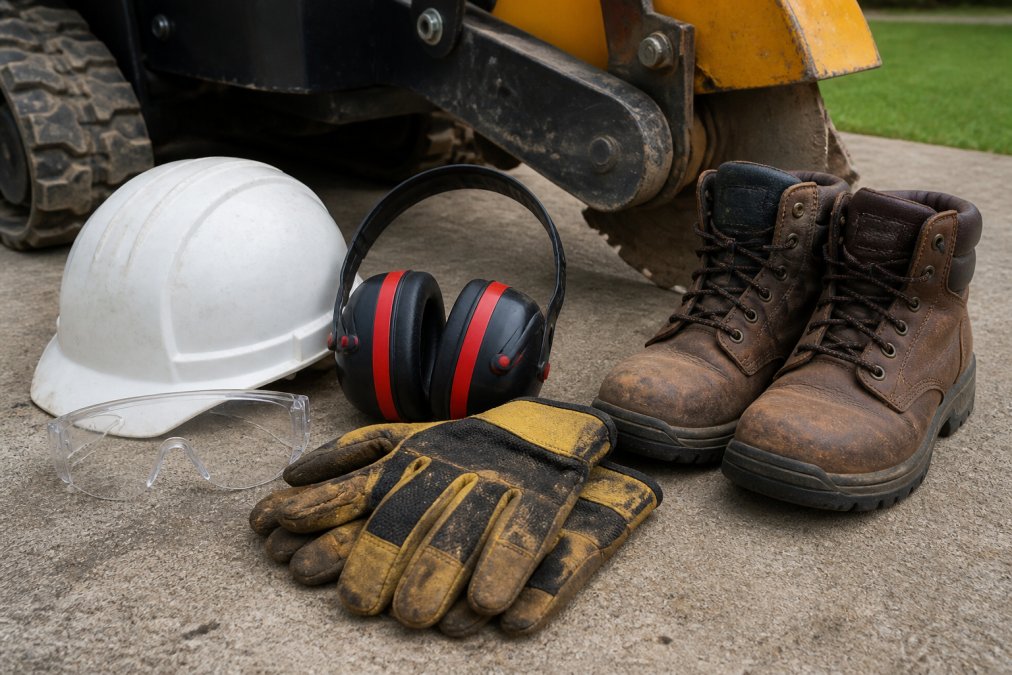
Wear long trousers and a long-sleeved shirt to protect your legs and arms. Avoid loose clothing that could catch on the machine. Remove jewellery, watches, and anything that might snag.
Site Preparation and Hazard Checks
Before you start grinding, walk the work area carefully and identify anything that could cause problems. Look for underground services including water pipes, gas lines, electricity cables, and irrigation systems. Call your local utility locating service if you're unsure what's buried beneath the surface. Hitting a service line creates danger and expensive damage.
Check for obstacles near the stump: fences, garden beds, buildings, or structures that could be damaged by flying debris or contact with the machine. The stump grinder throws chips in all directions, so clear a wide perimeter and keep bystanders, pets, and vehicles well away from the work area.
Inspect the stump itself for embedded objects: nails, wire, rocks, or metal stakes that might have been driven in years ago. These will damage the cutting wheel or cause dangerous kickback. Remove anything you find before you start.
Ensure the ground around the stump is reasonably level and firm enough for the machine to operate safely. Soft or boggy ground can cause the machine to tip or sink unevenly.
Step-by-Step DIY Tree Stump Removal Process
Step 1: Clear the Work Area
Start by removing loose debris around the stump: branches, leaves, rocks, and anything else that could get caught in the machine or create a tripping hazard. Clear a circle at least 2 metres around the stump in all directions.
Trim any remaining branches or protruding roots close to the ground so they don't interfere with the grinder's operation. The machine works best when it has clear access to the stump from all angles.
Mark off the work area with tape or rope if you're working in a residential setting. This keeps family members, pets, and neighbours at a safe distance. Stump grinding is loud and throws debris, so warn people nearby before you start.
Step 2: Check for Underground Services
Before the machine touches the ground, confirm there are no underground services in the work area. Call the national locating service or your local utility provider to have lines marked. This step is not optional, hitting a service creates serious risk.
Once services are marked, visually inspect the stump area one more time. Look for any signs of shallow pipes or cables: slight depressions in the soil, visible markers, or unusual ground features.
Step 3: Operate the Stump Grinder
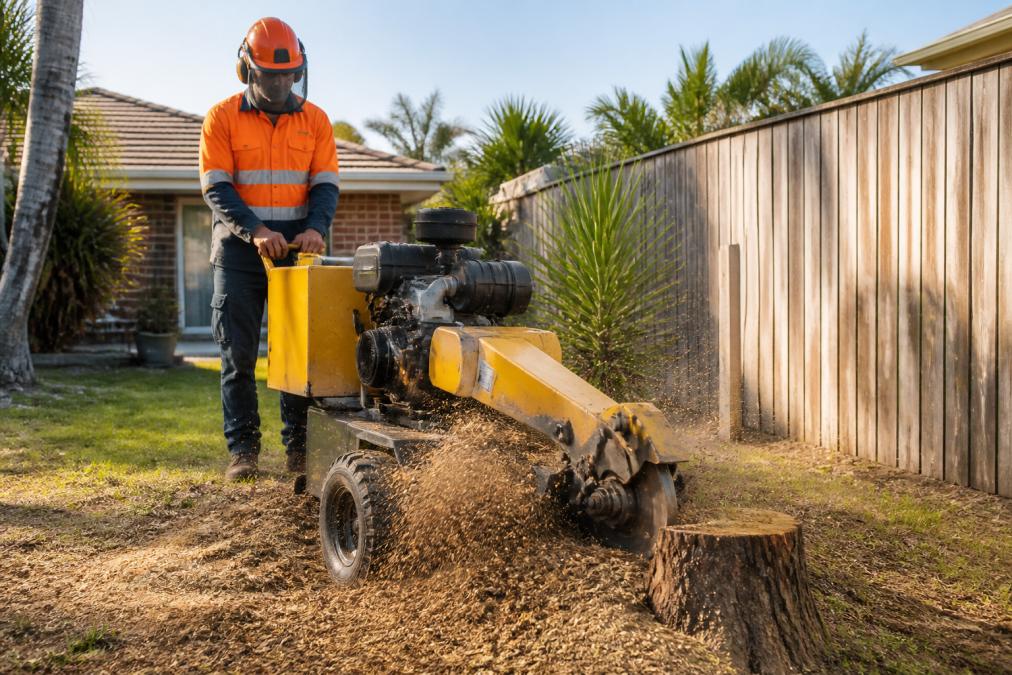
Position the machine so the cutting wheel is aligned with the top of the stump. Start the engine and let it warm up for a minute. The grinder should be running smoothly before you engage the cutting wheel.
Engage the wheel slowly and lower it onto the stump surface. Don't force it down, let the machine's weight and the wheel's rotation do the work. The wheel will gradually bite into the wood and start grinding.
Work methodically across the stump surface, moving the machine side to side and front to back to ensure even grinding. Grind down to at least 100mm below ground level so the remaining cavity won't catch on mowers or become a tripping hazard. The finer the grind, the easier the clean-up.
As you work, wood chips will accumulate around the machine. Pause occasionally to clear away excess chips so you can see the stump surface clearly. This also prevents chips from being re-ground, which makes the work less efficient.
Step 4: Grind to Depth and Clean Up
Continue grinding until you've reached your target depth. For most residential work, grinding 100-150mm below the soil surface is sufficient. The remaining hole can be filled with topsoil, compost, or left as is if you plan to plant or reseed the area.
Once you've finished grinding, turn off the machine and let it cool slightly. Clear away all the wood chips and debris. You can leave some chips on-site if you want, they'll break down naturally and add organic matter to the soil. Alternatively, rake them into piles for removal or composting.
Fill the remaining hole with topsoil, compost, or a mix suitable for your intended use. If you're planning to seed or turf the area, firm the soil and level it with the surrounding ground.
Using a Mini Loader to Assist With Stump Removal
For properties with multiple stumps or where you need to move large amounts of debris, a Mini Loader Hire Mackay can work alongside stump grinding to speed up the job. The loader's bucket can clear away wood chips, move soil, and help level the ground after grinding is complete.

The compact design fits through many residential gates and pathways, making it practical for backyard work. The machine comes supplied on a trailer with multiple attachments including a 4-in-1 bucket for moving material.
Using a mini loader means you can clear chips and debris far faster than raking by hand, and you can backfill and level the ground in one operation. For a job involving three or more stumps, hiring a mini loader often saves enough time to justify the additional cost.
Lawn Renovation Equipment After Stump Removal
Once stumps are ground and the area is cleared, you may find the surrounding lawn is compacted or damaged from the grinding work. This is the ideal time to tackle lawn renovation if needed.
Core aeration relieves soil compaction and opens the soil profile to allow air, water, and nutrients to penetrate deeper. A lawn aerator removes small plugs of soil rather than simply punching holes, which makes it more effective for established lawns. Aerator Hire Mackay includes a trailer, so transport is straightforward.

After aeration, top dressing with sand or compost-based material helps level minor low spots and encourages new growth. A sand spreader makes top dressing faster and more consistent than spreading by hand, covering larger areas with minimal effort.
A dethatcher or lawn scarifier removes built-up dead grass and organic matter, which prepares the lawn for aeration and top dressing. Many Mackay properties benefit from dethatching before renovation, particularly if the lawn feels thick or spongy.
These three pieces of equipment can be hired separately or combined into a complete lawn renovation package. Working through them in sequence (dethatch, aerate, top dress) delivers better results than attempting any single step alone.
Common Mistakes to Avoid When Grinding Stumps
The most common error is failing to check for underground services before starting. Hitting a water, gas, or electricity line creates immediate danger and expensive repairs. This step is non-negotiable.
Another frequent mistake is grinding too shallow. Stumps left above or just at ground level become a constant hazard and catch on mower blades. Grind at least 100mm below the surface to avoid this.
Underestimating the amount of debris is also common. A single large stump can produce several cubic metres of chips. Have a plan for managing or disposing of chips before you start, don't assume you'll deal with it later.
Rushing the job is another pitfall. Stump grinding takes patience. Forcing the machine down too hard or moving too quickly can damage the cutting wheel, stall the engine, or cause the machine to jump. Let the equipment work at its own pace.
Neglecting safety gear is perhaps the most serious mistake. Even experienced operators have been injured by flying debris or unexpected machine movement. Wear full protective equipment every time, regardless of how small or straightforward the job seems.
Finally, failing to fill the hole after grinding leaves a trip hazard and an eyesore. Backfill immediately and level the ground so the area is safe and ready for its next use.
Conclusion
DIY stump grinding in Mackay is a practical, cost-effective way to reclaim your yard and prepare the ground for landscaping or lawn work. With proper preparation, the right safety gear, and a methodical approach, most homeowners can tackle this job confidently.
The stump grinder available for hire from MarKay Outdoors handles residential stumps effectively, and the trailer makes transport simple. For jobs involving multiple stumps or significant debris, combining stump grinding with mini loader hire speeds up the entire project.
Removing stumps is often just the first step in a larger yard renovation. Consider whether your lawn needs aeration, dethatching, or top dressing once the stumps are gone. MarKay Outdoors supplies all the equipment you need to complete the work yourself. View equipment and hire options to book your stump grinder and plan your project.
Frequently Asked Questions
Is it cheaper to hire a stump grinder or pay for professional removal?
Hiring a stump grinder lets you handle the job yourself at a lower cost than paying a contractor. Stump grinder hire in Mackay starts from $200 for same-day hire, making it an affordable option for most residential properties. You save on labour costs by operating the equipment yourself, though you'll need to invest time in learning the process and preparing the site properly.
What size stump grinder do I need for a residential backyard?
A 15HP stump grinder is suitable for most residential stumps in backyards. This size is compact enough to manoeuvre in tight spaces but powerful enough to grind most tree stumps down effectively. The 15HP model available for hire in Mackay uses carbide cutting teeth and a petrol engine to handle stumps of varying sizes. If you're unsure about your specific stump, contact the hire provider before booking to confirm the machine will suit your needs.
How do I prepare a site for stump grinding?
Clear the work area of loose debris, rocks, sticks and toys that could be thrown by the grinder. Check for underground services including irrigation lines, electrical cables, gas lines and dog fences before you start. Mark out a safe perimeter and ensure adequate clearance from fences, buildings and structures. Mow the grass around the stump short so you can see the ground clearly. If soil is extremely dry and hard, water the area lightly a day or two before grinding to help the machine penetrate more effectively.
Can I use a Kanga mini loader to assist with stump removal?
Yes. A Kanga mini loader is useful for clearing debris before and after stump grinding, moving soil and materials, and helping with site preparation. The smaller Kanga KID (approximately 800mm wide) suits tight backyard access, whilst the larger PW628 handles bigger jobs. You can hire both the stump grinder and a Kanga mini loader together to tackle the full removal and clean-up process in one hire period.
This article was written using GrandRanker