

Table of Contents
- Do You Need a Licence for a Mini Loader?
- High-Risk Work Licence Requirements
- Towing Requirements for Mini Loader Trailers
- Mini Loader Safety Checklist Before You Hire
- How to Operate a Kanga Loader Safely
- Age Restrictions and Operator Eligibility
- What You Should Know Before Hiring
- Frequently Asked Questions
Last Updated: October 6, 2026
Do You Need a Licence for a Mini Loader?
Whether you're planning a DIY landscaping project or tackling a commercial site job, understanding the legal requirements is essential, so do you need a licence for a mini loader? The short answer is: it depends on your situation. Most DIY users and owner-operators don't need a formal licence, but high-risk work rules and towing regulations may apply depending on what you're doing and where you're working.
This guide covers the key licensing requirements, safety obligations, and practical steps to ensure you're compliant before you hire a mini loader.
High-Risk Work Licence Requirements
A High-Risk Work (HRW) Licence is required in Queensland when you operate certain machinery in ways that pose genuine hazards. The question is whether a mini loader falls under those rules.
When a High-Risk Work Licence Applies
Most DIY users operating a mini loader on their own property do not need an HRW Licence. The licence requirement applies when you're performing high-risk work, specifically, operating plant (machinery) in a way that exposes workers or the public to significant risk of serious injury or death.
For a mini loader, this typically means:
- Operating on a commercial or industrial site where other workers are present
- Working as part of a construction or earthmoving contract
- Operating in areas where public access is possible and not properly controlled
- Performing work for payment or as part of a business operation
If you're hiring a mini loader from MarKay Outdoors for a one-off DIY project on your own residential property, you almost certainly don't need an HRW Licence.
Exemptions for Owner-Operators and DIY Work
Queensland's Work Health and Safety Act includes exemptions for owner-operators and DIY work. These exemptions are designed to allow homeowners to undertake their own maintenance and improvement projects without triggering licensing requirements.
Key points:
- Owner-operators working on their own property are generally exempt
- DIY work on residential land typically doesn't require an HRW Licence
- The exemption applies when the work is for your own use, not commercial gain
- If you're doing the work yourself (not hiring a contractor), the rules are simpler
The critical distinction is purpose: if you're doing the work for yourself or your family on your own property, you're likely exempt. If you're doing it as a paid service or on someone else's site, the rules change.
Towing Requirements for Mini Loader Trailers
Most mini loaders, including the Kanga loaders available from MarKay Outdoors, are supplied on trailers. Towing a trailer has its own set of legal requirements.
To tow a trailer in Queensland, you need:
- A current, valid driver's licence appropriate to the vehicle and trailer combination
- Your licence must authorise the towing of trailers of that size and weight
- For most standard mini loader trailers, a standard car licence (C-class) is sufficient, provided the trailer's Aggregate Trailer Mass (ATM) doesn't exceed the limits for that licence class
- If the trailer exceeds those limits, you'll need a heavier class of licence (such as an HR or HC class)
Before you hire, check:
- The ATM (Aggregate Trailer Mass) of the trailer being supplied
- Whether your current licence class permits towing that trailer
- If you're unsure, contact the Queensland Transport and Main Roads authority.
Towing rules exist to keep roads safe. Operating a trailer heavier than your licence permits is an offence and can result in fines and loss of licence points.
Mini Loader Safety Checklist Before You Hire
Even if you don't need a formal licence, you do need to be competent and safe. Before you take possession of a mini loader, work through this checklist.
Pre-Operation Inspection
Before you start work, inspect the machine thoroughly:
- Check all hydraulic hoses for leaks, cracks, or damage
- Verify that the bucket, auger, or other attachment is securely fastened
- Inspect the tyres or tracks for visible damage or excessive wear
- Test all controls (lift, lower, tilt, rotation) through their full range without load
- Check fuel and hydraulic fluid levels
- Look for any loose bolts, guards, or panels
- Confirm the operator's seat is secure and the seatbelt functions
- Verify that warning labels and safety signage are visible and legible
If you notice any damage or fault, stop before proceeding. Don't attempt to repair or modify the machine yourself.
Operating Safety Essentials
Once you've inspected the machine, follow these core safety practices:
- Always wear high-visibility clothing, a hard hat, and steel-capped boots
- Keep bystanders and children well clear of the work area
- Never operate the machine under the influence of alcohol or drugs
- Do not allow unauthorised people to operate the equipment
- Keep your hands and feet clear of moving parts and attachment points
- Never reach into the bucket or attachment whilst it's in motion
- Lower the bucket to the ground before leaving the operator's seat
- Switch off the engine and remove the key when you're not actively using the machine
- Do not operate in heavy rain, strong winds, or poor visibility
- Avoid steep slopes or unstable ground that could cause the machine to tip
These practices reduce the risk of injury and equipment damage. They're not optional, they're the foundation of safe operation.
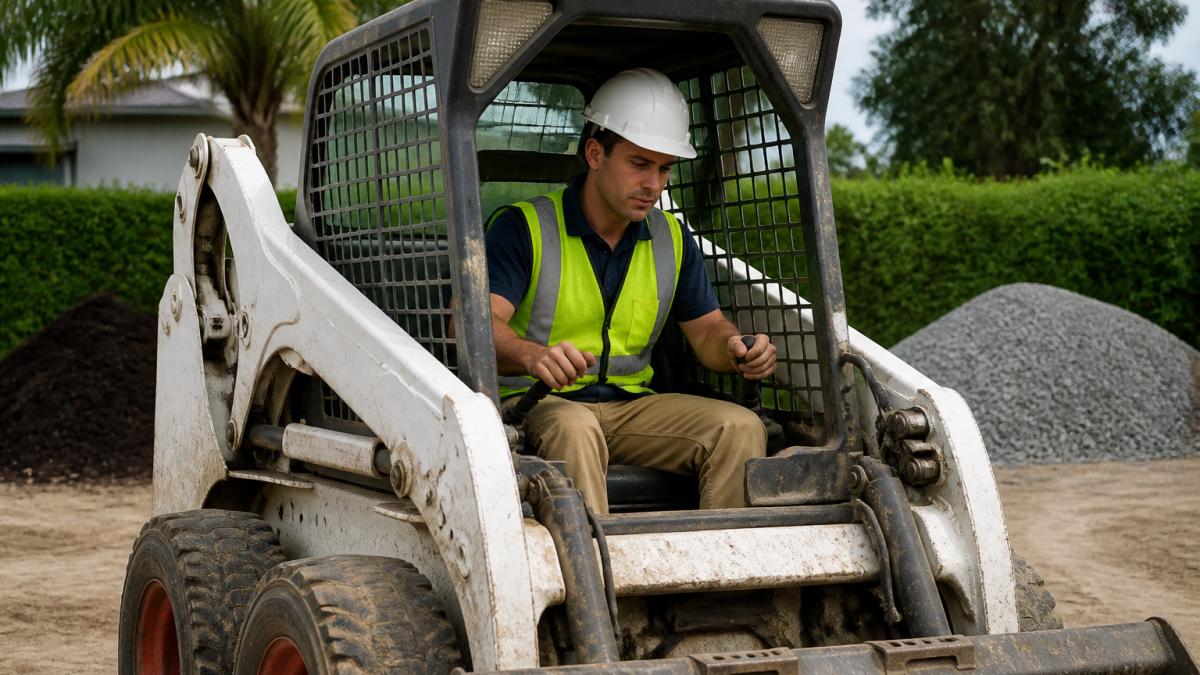
How to Operate a Kanga Loader Safely
The Kanga mini loaders available from MarKay Outdoors are intuitive machines, but understanding how to operate them correctly makes the difference between a smooth project and a stressful one.
Familiarisation and Controls
Before you start digging or moving material, spend time getting familiar with the controls:
PW628 Kanga Mini Loader Hire Mackay | MarKay Outdoors →
- Locate the main engine start/stop switch and ensure you know how to shut down the machine quickly
- Identify the hydraulic control levers (usually on the right side of the seat) that operate the bucket, auger, or other attachment
- Understand that one lever typically controls lift and lower, whilst another controls tilt or rotation
- Practice moving the controls gently to understand the machine's response
- Test the attachment at ground level before attempting to lift loads
- Get a feel for how the machine handles on level ground before moving to slopes or uneven terrain
The Kanga PW628 and Kanga KID KK216 both feature straightforward control layouts. Take 10 minutes to familiarise yourself with the specific levers and switches on the machine you've hired.

Common Operating Mistakes to Avoid
These mistakes are common but easily preventable:
- Overloading the bucket beyond its rated capacity, check the manual for load limits
- Tilting the bucket too aggressively, which can cause material spillage and loss of control
- Operating on slopes steeper than the machine is rated for, increasing rollover risk
- Leaving the engine running whilst you're away from the operator's seat
- Digging too deep and hitting underground services (always call Dial Before You Dig on 1100 to identify services first)
- Moving too quickly, especially when the bucket is loaded or raised
- Failing to lower the bucket when moving between work areas, which reduces visibility and stability
The machine is designed to be forgiving, but it still requires respect and attention. Work steadily, stay focused, and stop if something doesn't feel right.
Age Restrictions and Operator Eligibility
Queensland law sets minimum age requirements for operating plant and machinery. These rules exist to protect young workers from hazards they may not be equipped to manage.
Generally, you must be at least 18 years old to operate a mini loader. This applies whether you're doing it as part of employment or as a DIY project. Some machinery has higher age requirements depending on the specific hazard classification, but 18 is the standard threshold for compact loaders.
If you're under 18 and want to operate a mini loader:
- You cannot do so legally without an exemption
- If you're part of a structured apprenticeship or training programme, there may be supervised pathways, but these require formal documentation
The age rule is straightforward: if you're 18 or older and meet the other requirements in this guide, you're eligible. If you're younger, you'll need to wait or arrange supervised operation under a qualified adult.
What You Should Know Before Hiring
Before you contact MarKay Outdoors to book a mini loader, clarify these practical points:
Which machine do you need? The Kanga KID KK216 is ideal if access is tight (800mm wide, perfect for residential backyards and narrow pathways). The Kanga PW628 offers more power and capacity for larger jobs where space isn't a constraint.

How long will you need it? Hire periods range from same-day pickup to weekly rates. A single-day job might suit a 24-hour hire, whilst a multi-stage project may justify a 3-day or 7-day hire.
Do you have the right licence? Check that your driver's licence permits towing the trailer. If you're unsure, verify with the Queensland Transport and Main Roads authority.
Have you called Dial Before You Dig? Before you dig anywhere, call 1100 to identify underground services (electricity, gas, water, telecommunications). This is a legal requirement and takes just a few minutes.
Do you understand the attachment you need? The Kanga loaders come with multiple attachment options (bucket, auger, trencher, levelling bar). Confirm which attachment suits your job before you book.
What's your site condition? Mini loaders work best on reasonably level, firm ground. If your site is very steep, waterlogged, or unstable, the machine may not be suitable.
Taking time to answer these questions before you hire saves confusion and ensures you get the right equipment for your project.
Frequently Asked Questions
Do I need a high-risk work licence to operate a mini loader?
In most cases, no. High-risk work licences apply when someone is employed or contracted to operate machinery on another person's site. If you're hiring a mini loader to operate on your own property for a DIY project, or if you're self-employed and operating it on your own work, you typically don't need a licence. However, if you're employed by a contractor or landscaper to operate the equipment on a client's site, your employer must ensure you hold the appropriate high-risk work licence under Queensland's Work Health and Safety legislation.
What's included in a mini loader safety checklist?
Before operating a mini loader, check that the engine starts smoothly, all hydraulic controls respond without lag or sticking, brakes function properly, tyres have adequate tread, and there are no visible leaks or damage. Inspect the bucket and attachments for cracks or bent components. Ensure the seat belt works and the rollover protective structure (ROPS) is intact. Clear the work area of obstacles, bystanders and hazards. Wear high-visibility clothing, a hard hat and steel-capped boots. Never operate the machine if you're unfamiliar with the controls, spend time learning them on level ground first.
What licence do I need to tow a mini loader trailer?
You need a standard car or light vehicle licence to tow a mini loader trailer in most cases. Trailers under 750 kg (unladen mass) can be towed on a standard driving licence. Heavier trailers may require a specific towing endorsement depending on the combined mass of your vehicle and trailer. Check your vehicle's specifications and the trailer's weight before hiring. If you're unsure, contact your local transport authority.
Are there age restrictions for operating hired compact equipment?
Most hire companies require operators to be at least 18 years old and hold a valid driving licence.
Hiring a mini loader doesn't require a formal licence for most DIY work, but it does require responsibility. Check the towing rules for your licence, follow the safety checklist, familiarise yourself with the controls, and respect the machine's limits. When you're ready to hire, MarKay Outdoors can supply a Kanga loader with full support and guidance on operation and safety. View equipment and hire prices to find the right machine for your project.